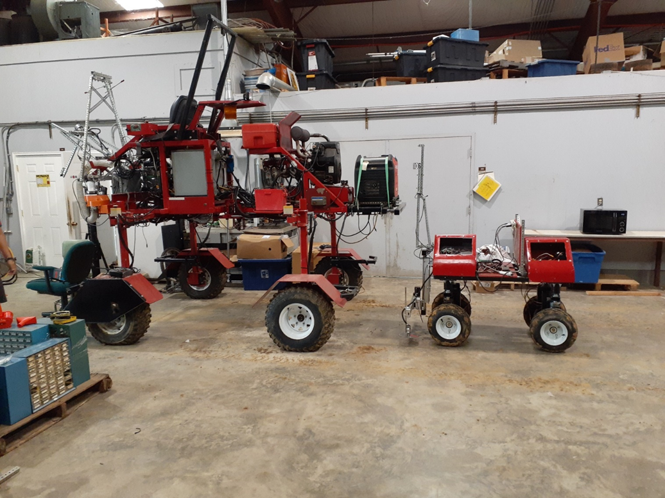
Small to mid-sized farmers are limited to certain farm management practices due to the cost and infrastructure required for crops such as corn, soybeans, cotton and peanuts. As one solution, large tractors and equipment can be replaced with small intelligent rovers and attachments that can be used for small acreages at a lower cost per unit. The number of acres determines the number of small inexpensive and autonomous units (rover + attachment) needed. Therefore, the number of units is dependent on the acreage each unit can cover and the number acres being farmed. This provides small farmers an entry point into advanced technologies at a more economic level. This research examines rover platforms, attachment development and cost/benefit of small autonomous rovers.
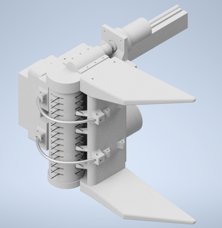
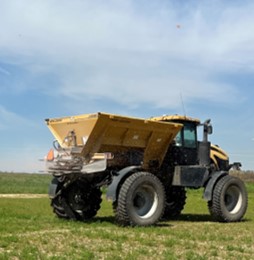
Livestock waste is commonly utilized as a fertilizer source in most states. However, due to the way it is typically applied (e.g., via spinner spreader), the distribution uniformity of the nutrients is unreliable. While livestock waste will continue to be a source of fertilizer (Georgia is the top broiler producing state in the US providing growers in this region with an abundant local source of livestock waste), new application methods need to be implemented which better target applying uniform amounts of nutrients closer to the root zone of the plant. In a combined effort a manure injector, (in this case a poultry litter injector) is being developed at UGA, which matches the field capacity and efficiency of a standard fertilizer spreader.
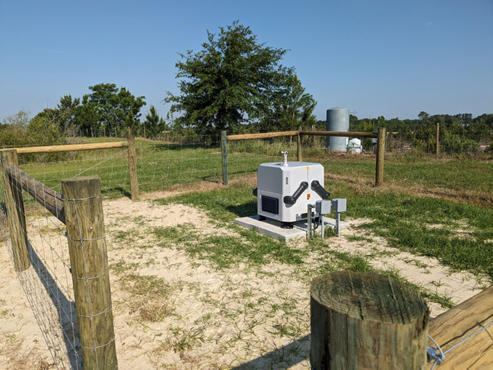
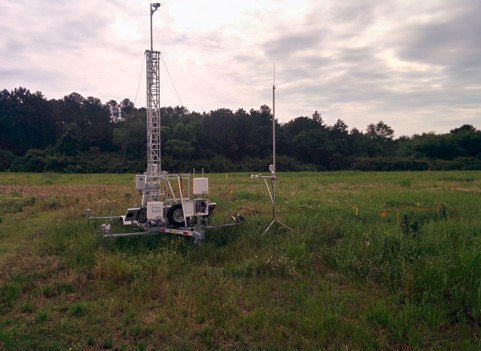
Management practices to reduce CO2 and CH4 emissions will be monitored using an eddy covariance tower. Soil GHG emissions are driven by rate and type of nutrient (manure, urine, inorganic fertilizer), soil temperature and moisture, and organic carbon. In livestock, GHG emissions will be monitored on multiple surface types (bare soil, vegetation, manure patch, urine patch) and dates. UAV imagery will be used to classify field sub-areas as one of the surface types sampled for GHG and used to appropriately upscale GHG emissions to field level. During the crop growing season, GHG will be taken at multiple locations and dates, along with soil and air temperature, soil moisture and electrical conductivity. By combining point-sampled GHG and its drivers and leveraging remote sensing and soil sensor networks, we will be able to upscale point-sampled GHG in a livestock cropping system to field level and compare it with field-level GHG measurements from the eddy covariance tower.
Leo Bastos
IoT Pest Monitoring
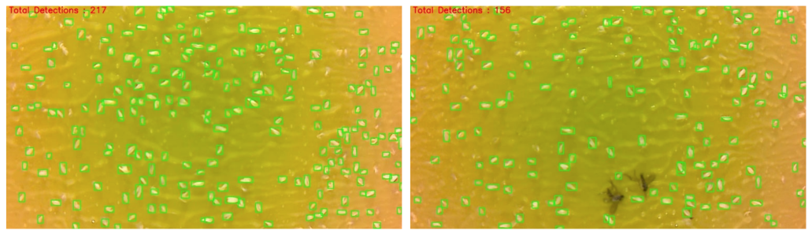
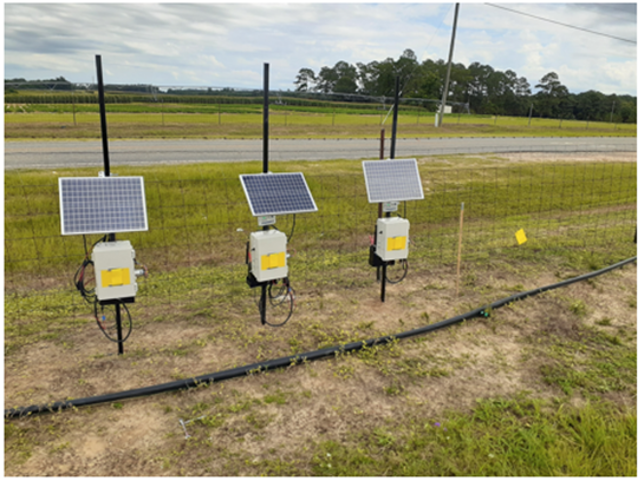
There are many serious pests of row and vegetable crops around the world. Current commercial IoT (Internet of Things) remote insect monitoring stations cannot differentiate some lepidoptera species and have trouble with identifying small insect pests. We are developing a remote IoT insect sensor that can provide data at a higher temporal frequency without maintenance throughout the season. Images of trapped insects are sent from the remote sensor to a server that can be used as input to a deep neural network for counting and reporting insect pests. These stations report pest activity without maintenance for several months.
DJI dock used for autonomous flights of M30T drone
One of the barriers to UAV scouting is the flight time restrictions due to battery life. A DJI M30 drone with Docking station will run missions autonomously over the demonstration farm. The drone is equipped with optical and thermal cameras and has DJI FlightHub 2 for mission planning and data analysis.
M30 drone taking off
Glen Rains
University of Georgia - Stripling Irrigation Park, Camilla, GA
Irrigation Management
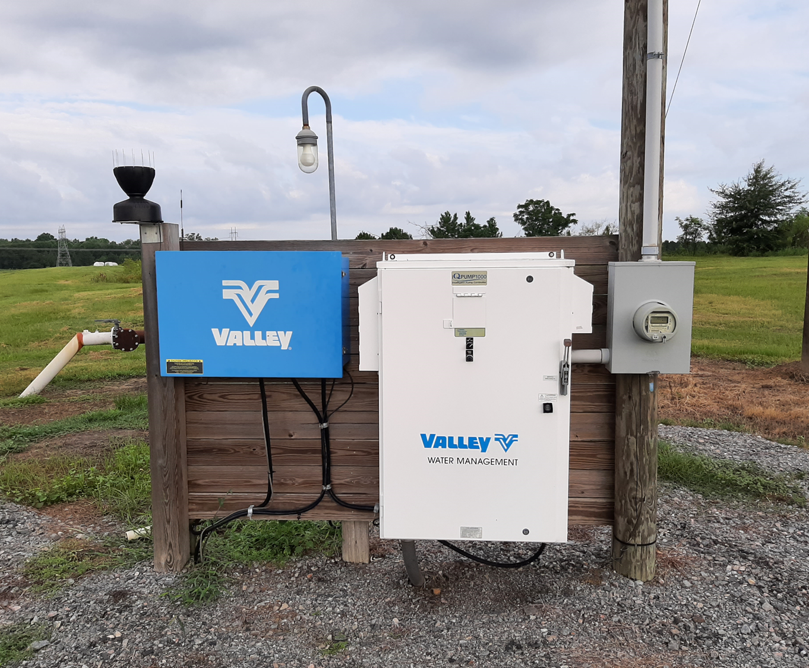
Irrigation Management panel
One of the most important and often neglected parameters to crop production are water and irrigation management. Georgia is fortunate to have an entire research center focused specifically on irrigation research, this is Stripling Irrigation Research Park (SIRP) located just outside of Camilla, GA. Advanced research has been ongoing at SIRP for over 20 years. This site supports research such as remote soil moisture monitoring, remote sensing of crop water requirements, remote pivot monitoring and control, development, implementation and testing of irrigation scheduling technologies, variable rate irrigation, fertigation and chemigation. These practices are continuously developed, researched, and evaluated at SIRP. Thus, by combining the research occurring at this site with the capabilities of the DATA Farm, we will be able to exhibit the best options for managing crop water requirements, both temporally and spatially, throughout the production season. Tools such as soil moisture sensors, UAS and satellite imagery, infield crop measurements, and crop ET models will be implemented to match current crop water requirements to irrigation application rates.
Wesley Porter
Clemson and University of Georgia
Multi-Robotics System
For small intelligent rovers to be viable, there must be a method of self-organization for planning missions of all the operational rovers concurrently. The goal here is to develop a new method for optimally distributing n rovers without human intervention in the field in such a way to maximize coverage of the regions of interest based on the operation to be conducted.
Javad Mohammadpour Velni
Data Management and Analysis
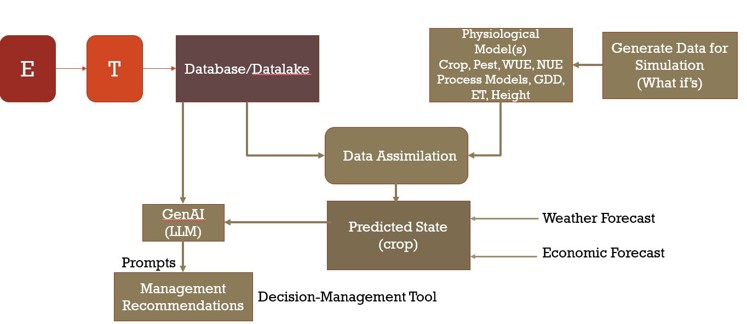
Data pipelines need to be able to handle disparate date types in batch or streaming form. Once extracted, the data must then be converted to a useful form such as vegetative indices derived from drone imagery. Finaly this information will be analyzed and used with crop models to predict the expected crop/livestock development. WE will then utilize the power of Large-language models and AI agents to create a decision management tool for the farmer.
Precision technologies has considerably improved row-crop planter performance while also providing access to terabytes of real-time data. There are opportunities to automate planter functions for further improvement of in-field planter performance, such as variable downforce required for maximum emergence as a function of seed depth and soil moisture. While recent planter advancements are targeted towards corn and soybean production; similar applicable technologies for cotton and peanut production will be developed and integrated along with determining ways to effectively utilize the data generated on these machines to enable data-driven, site-specific planting decisions to maximize crop emergence and yield potential.
Improved Efficiency and Precision of Liquid/Dry Material Application
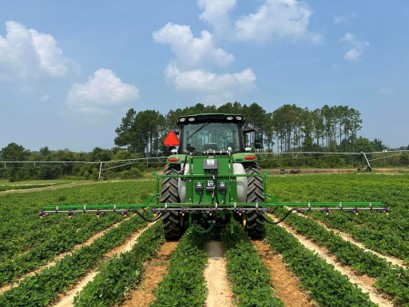
With increased off-target and safety concerns regarding the use of pesticides, and environmental concerns over misapplication of fertilizers, advanced application technologies will be implemented that can help in improving the precision and accuracy of fertilizer and pesticide applications. Information on effective and efficient utilization of current technologies such as Pulse Width Modulation (PWM), auto-boom height control, site-specific prescriptive and variable-rate application technologies will be tested and demonstrated on the farm. Further, technology to measure real-time spray droplet dynamics during pesticide applications and regulate spray parameters to maintain the target application despite changes in weather conditions such as wind speed and temperature will be developed and integrated into the existing spray machinery.
University of Georgia - Beef Cattle Management Unit
Herd Monitoring
Herd monitoring is a critical component to developing a livestock management plan. Initially, a livestock monitoring system will chosen that records GPS movements and evaluations to identify and track individual animal behavior and health statistics including data reflecting eating time, rumination, and external body temperature.
Jennifer Tucker
Livestock Grazing Management
Available forage will be quantified using an ATV mounted forage assessment tool. Seasonal field performance will be evalauated and used to make foraging management decisions.
Jennifer Tucker
Socio-Economic Analysis
Utility Maximization
Economists have evaluated how consumers maximize utility subject to given budget constraints and extending the concept of utility or satisfaction to the rural household as optimizing a joint utility function that includes profit-maximizing farm operation with a tradeoff for labor and leisure. Information suitable for conducting utility analysis will be collected for each of the systems that traditional economic profitability analysis is conducted.
Terry Griffin
Human Capital
Research on quality-of-life reported that traditional macroeconomic statistics such as growth in GDP per capita do not adequately capture the lived experience of people. The causal linkages between growth in human capital and quality-of-life are not unidirectional. Increasing the level of education (formal and informal) increases production of new ideas, and potentially increases human capital and improves quality-of-life. Therefore, if a new technological innovation solution is made available, which requires a level of human capital that is not attainable, the technology itself does not lead to an increase of the quality-of-life, and therefore does not impact productivity or environmental stewardship.
Terry Griffin
Intelligent Vehicles
The costs of autonomous systems will be closely monitored such that the benefits are not the entire focus of the research. Observing traditional status quo harvest systems over many years provided insights into how many hours per week large cotton harvest machinery could enter the field to conduct fieldwork]. A main concern for current cotton producers when discussing the functionality of intelligent rovers within their operation includes the issue of downtime. Farm operators often ask what happens when machines are out of service and unable to perform their task.
Terry Griffin
Cost and Net Returns Analysis
Economists have traditionally been concerned with how farm operators maximize profits. Traditional economic analysis evaluating changes in output (yield, weight gain), inputs (fertilizer, feed), and net returns (revenues minus costs) will be conducted for each sub-system of the 4-D Farm including post-harvest foraging in cotton or peanut fields, multipurpose system of small rovers, poultry litter injection, solar powered irrigation, carriage house systems, cover crop benefits, and non-chemical weed control. Given the thrust of the 4-D Farm includes incorporating a circular economy, attention will be devoted to ascertaining the value of recycling, reducing and reusing on-farm resources and how value-added products can be incorporated at a profit.