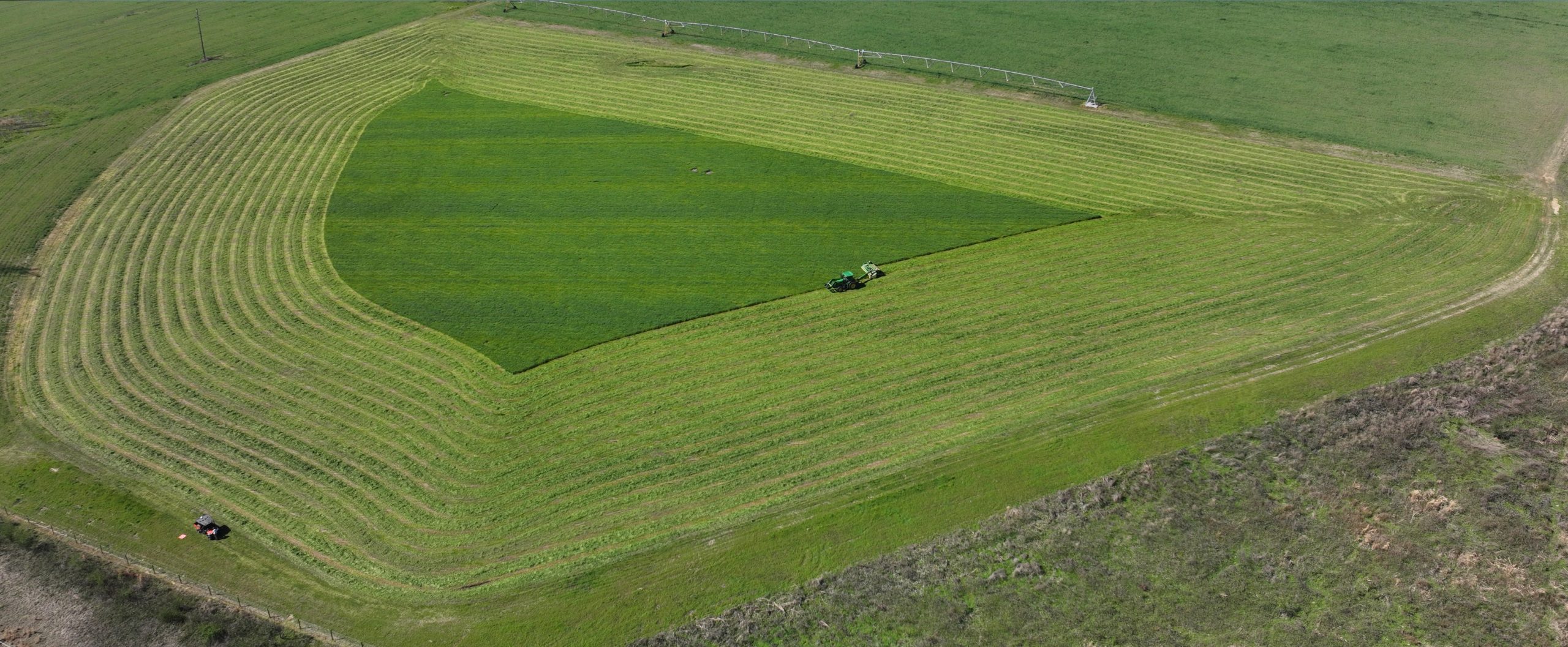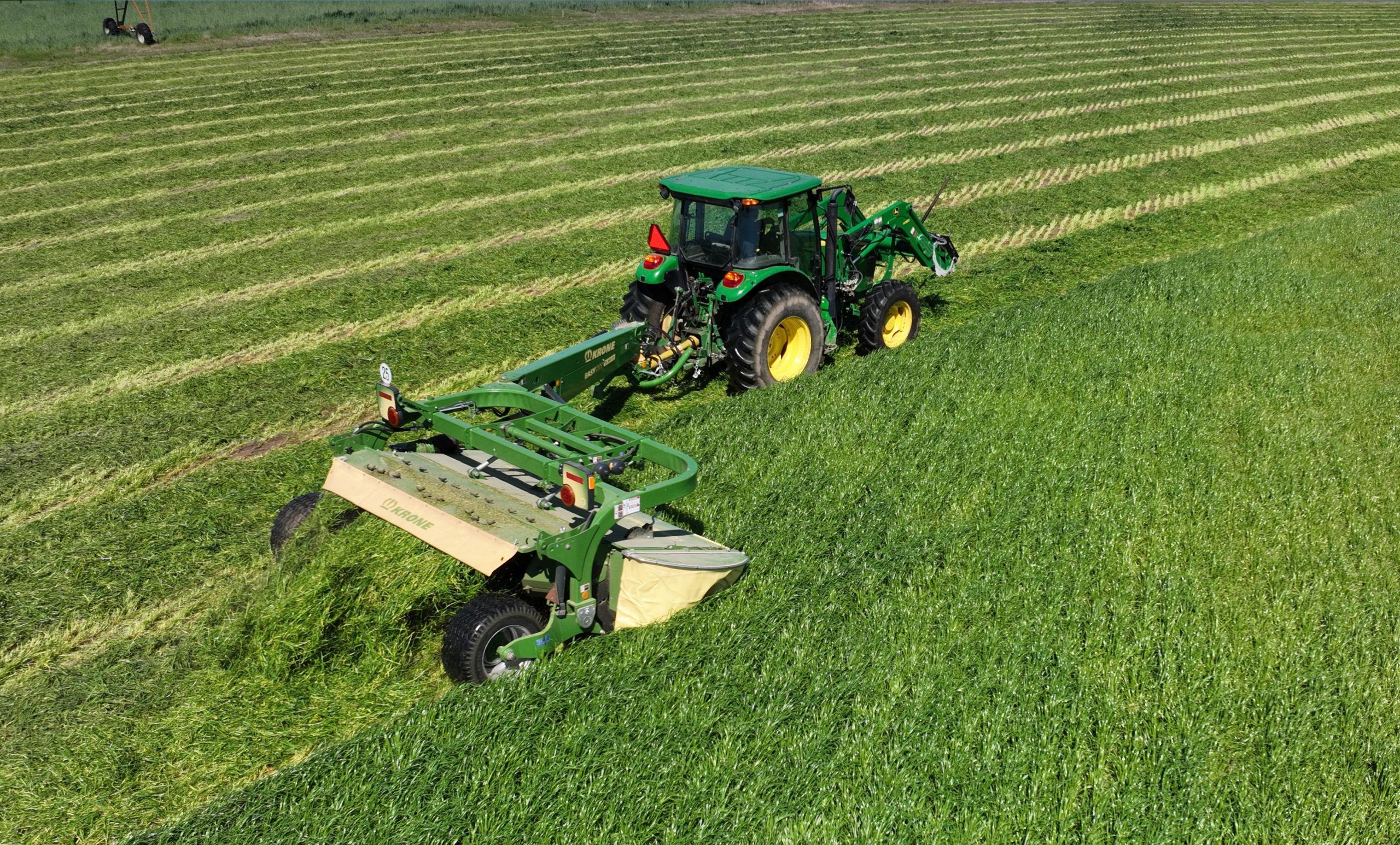
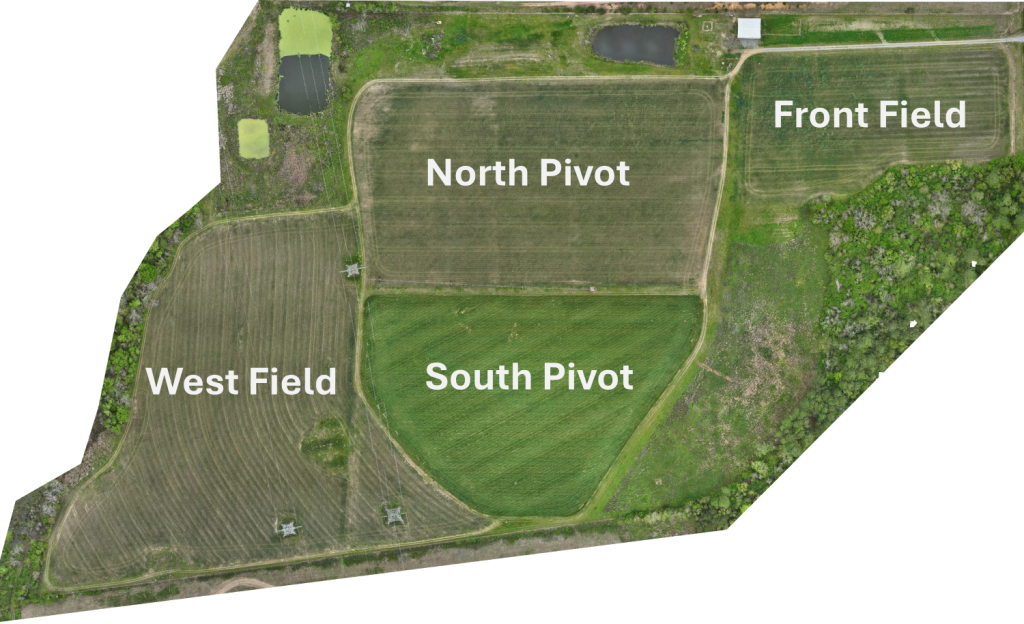
March was a busy month at the DATA Farm after the winter months of developing crop plans and monitoring the cover crops. On March 17th, the first cutting of the ryegrass in South Pivot took place. Figure 1A shows an overhead picture of the South Pivot field during the cutting operation, and Figure 1B shows an up-close picture of the tractor and Krone hay cutter running in the field.
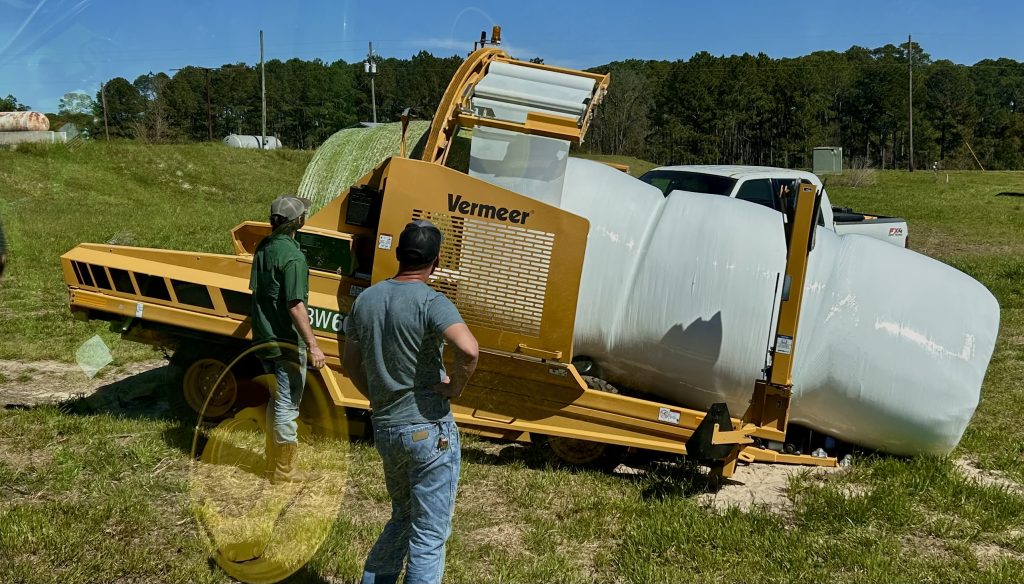
The cut ryegrass was allowed to dry overnight, and the following day, March 18th, the cut ryegrass was baled by ABAC’s forage team. The yield from South Pivot this year was 25 round bales, an increase over the 15 bales produced from one cutting during the 2024 season. The round bales were moved to the ABAC Main Farm where they were wrapped with a Vermeer BW600 inline bale wrapper as shown in Figure 2. The BW600 wraps the bales in plastic to seal them for the fermentation process to take place and convert them into silage to feed the cows at ABAC. This machine has a sensor to pause after it wraps a bale and waits for the next bale to be loaded so one operator is required once you get it started. After it wraps a bale, the machine pushes itself forward to create a line of bales wrapped together.
This year there is enough time to make a second cut on South Pivot before termination to plant peanuts in May. On March 19th, an application of nitrogen was made at a rate of 75 lbs. per acre. This nitrogen will stimulate growth in the ryegrass to produce the second cutting. The nitrogen product applied was a coated urea to prevent volatilization issues now that the air temperatures are in the upper 70°F range and lower 80°F range.
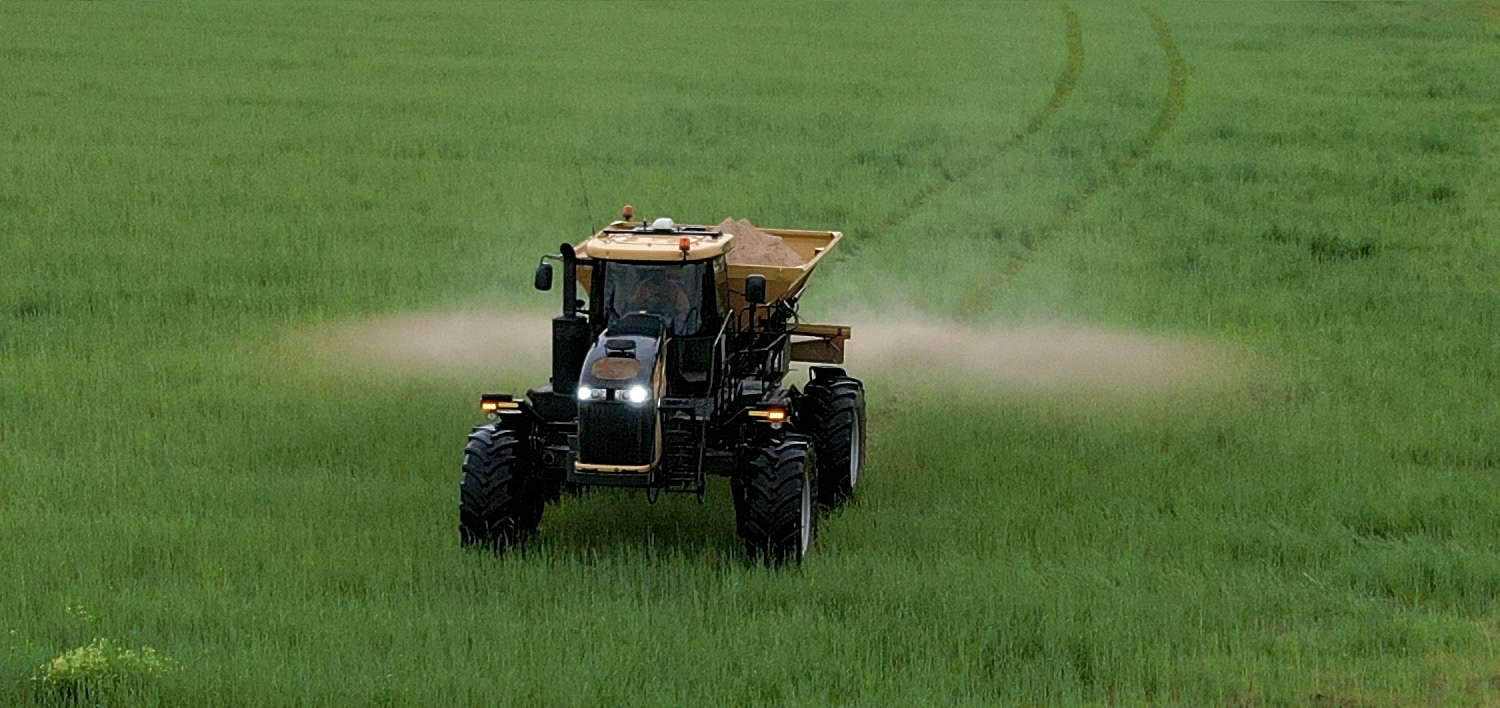
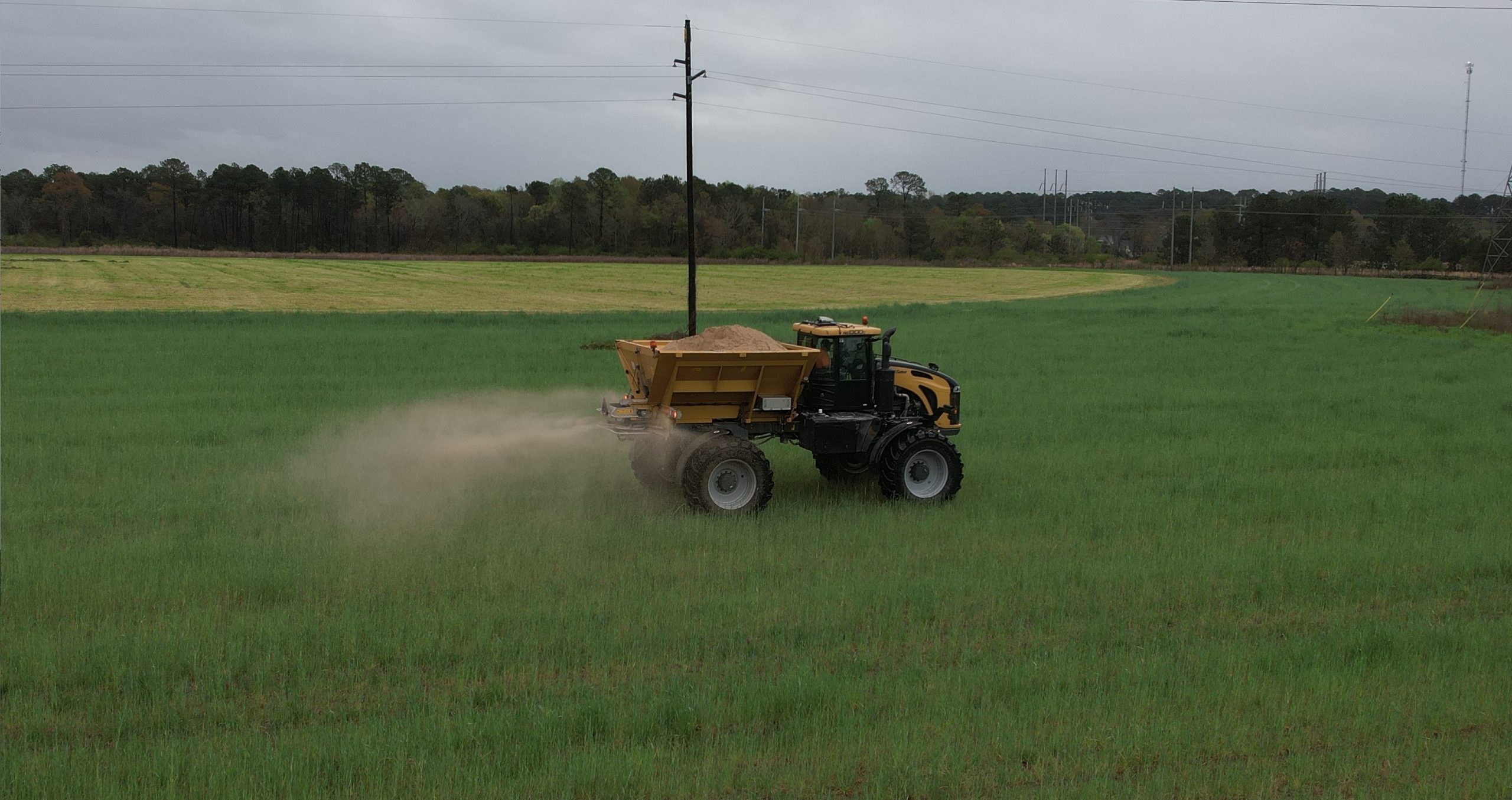
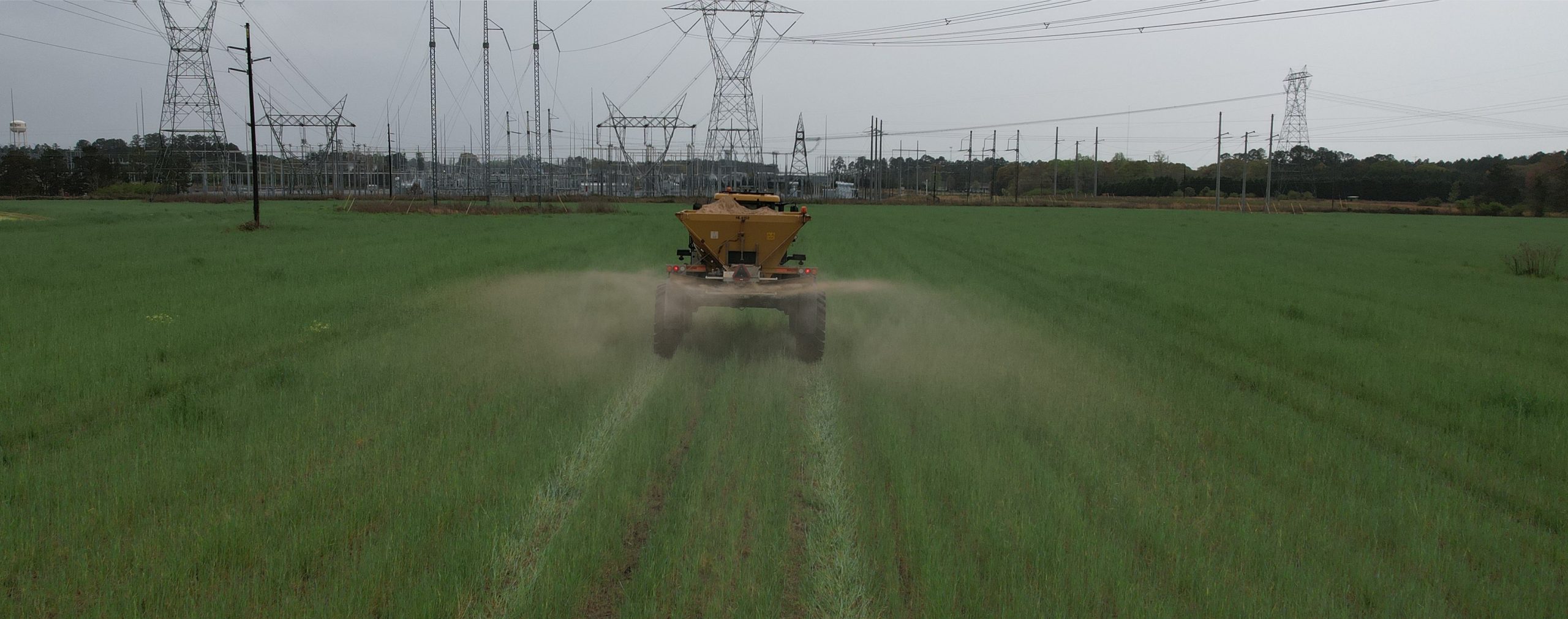
On March 20th lime was applied to all four fields at the DATA Farm for the 2025 crop season. The soil results, showed a blanket rate of 1,000 lbs. per acre (0.5 ton per acre) was needed. Figures 3A, 3B, and 3C show the RoGator spreader running in West Field and the 72-foot-wide lime spread pattern is visible coming from the rear of the machine.
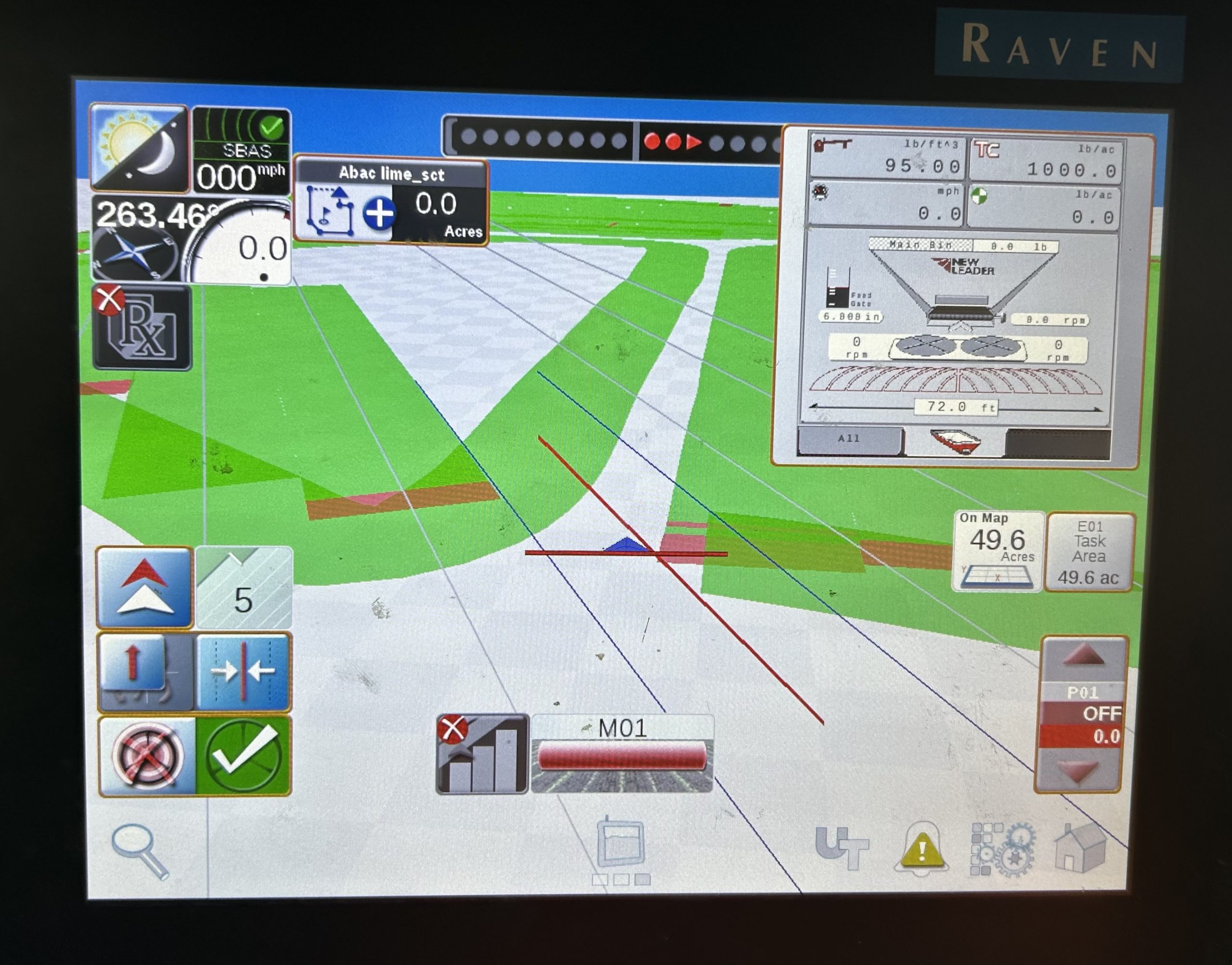
The decision to have the lime custom applied versus using our spreader was made because the operational cost of applying lime ourselves last year was higher than the $8 per ton rate the dealership charged. By applying half a ton of lime per acre the cost to apply was $4 per acre. Figure 4A shows the Raven monitor screen in the cab of the RoGator that controls the rate of application and shows a coverage map for the operator. Figure 4B shows the as-applied map in Ag Leader SMS from the Raven’s logged operation data. The map shows all areas of the fields were covered and where the rate was under target (red), on target (yellow), or above target (green).
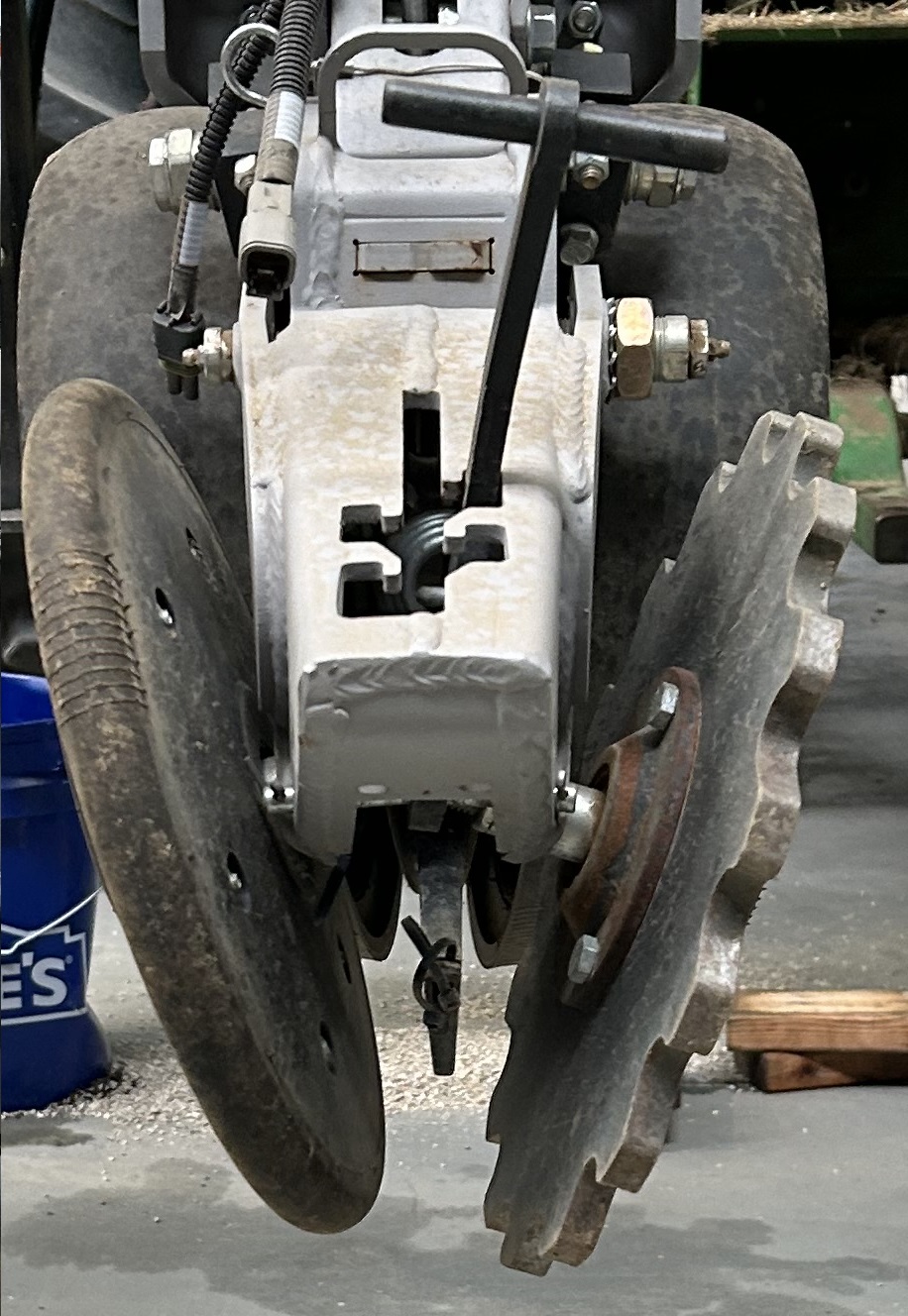
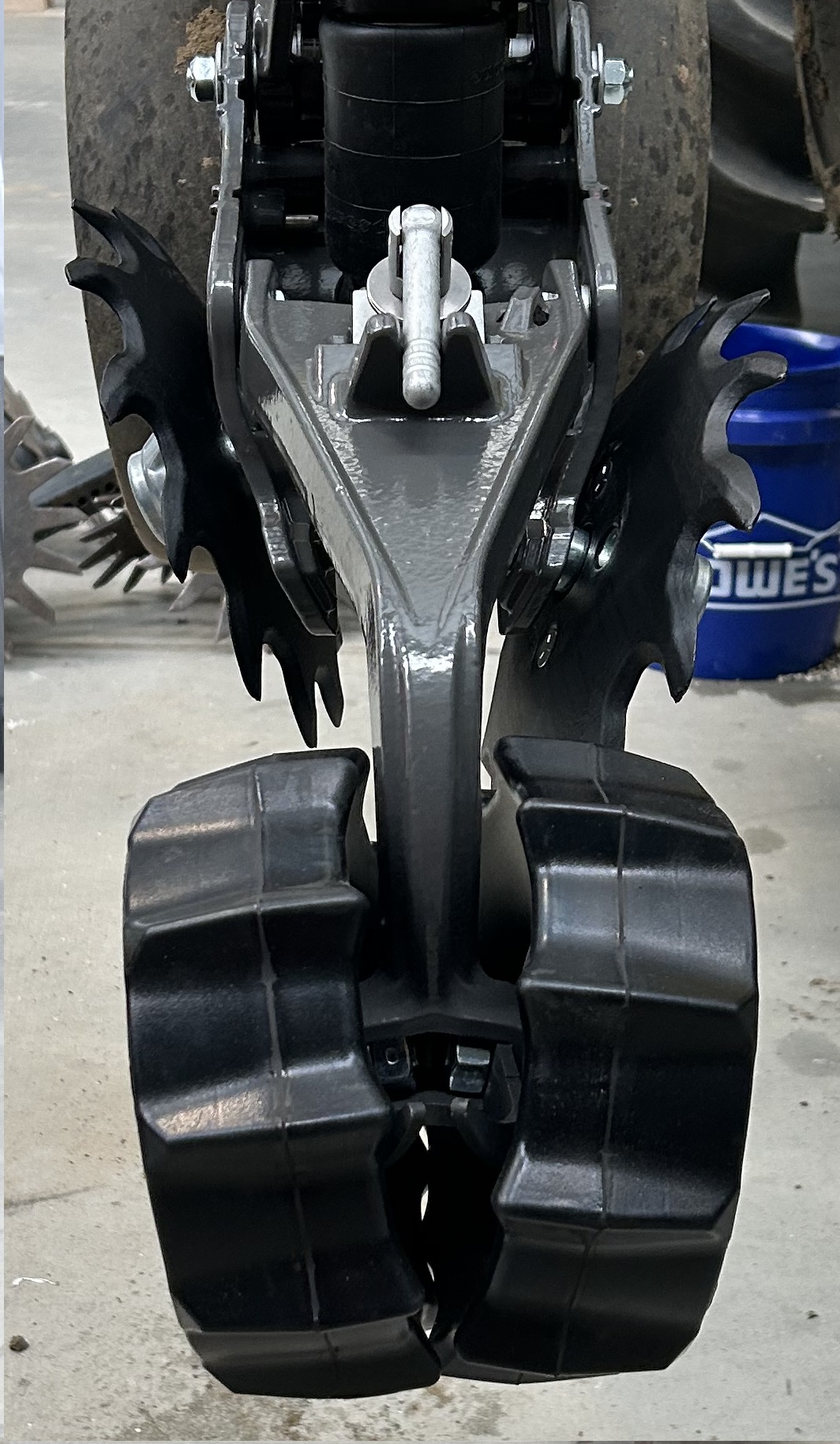
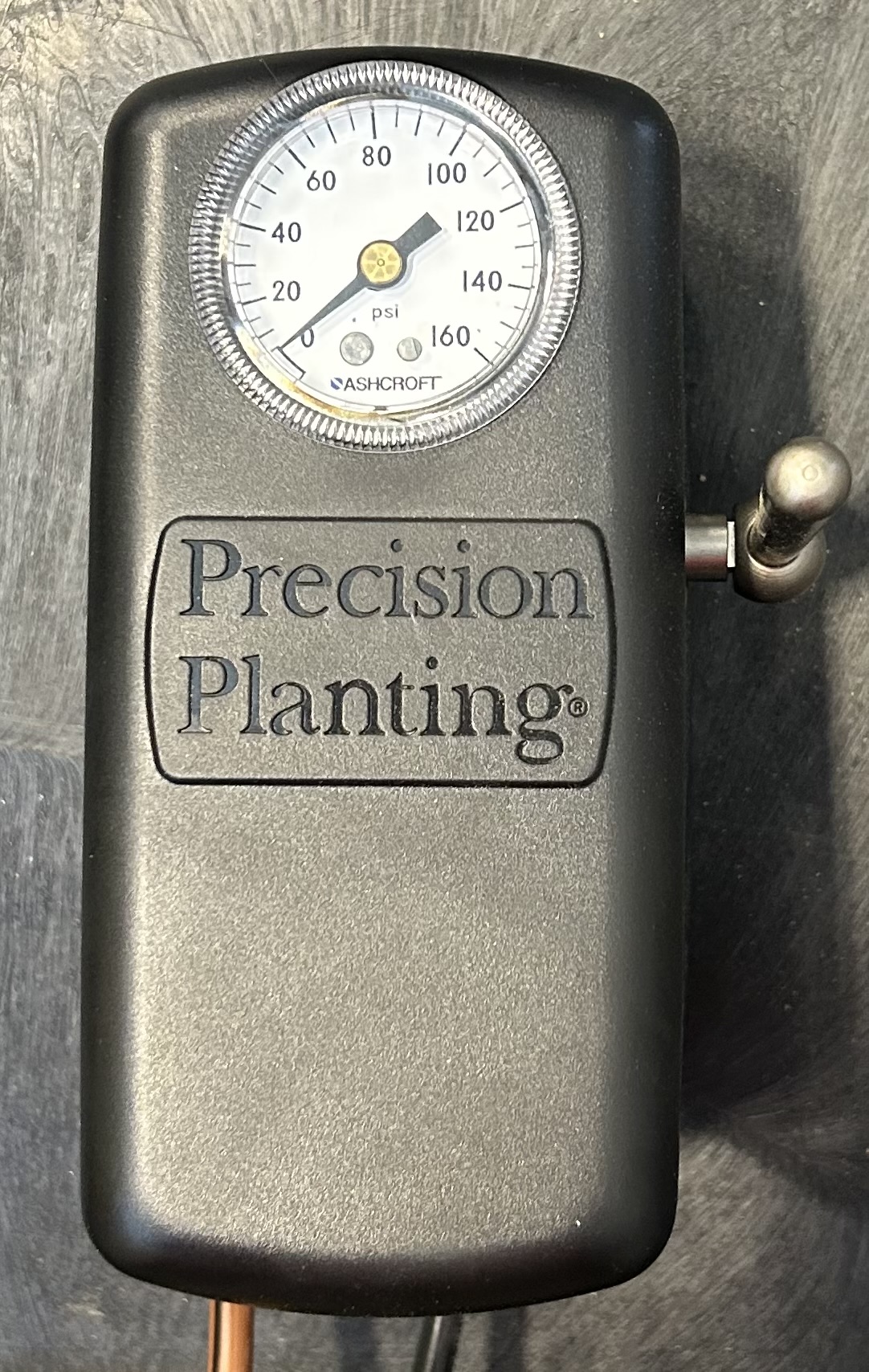
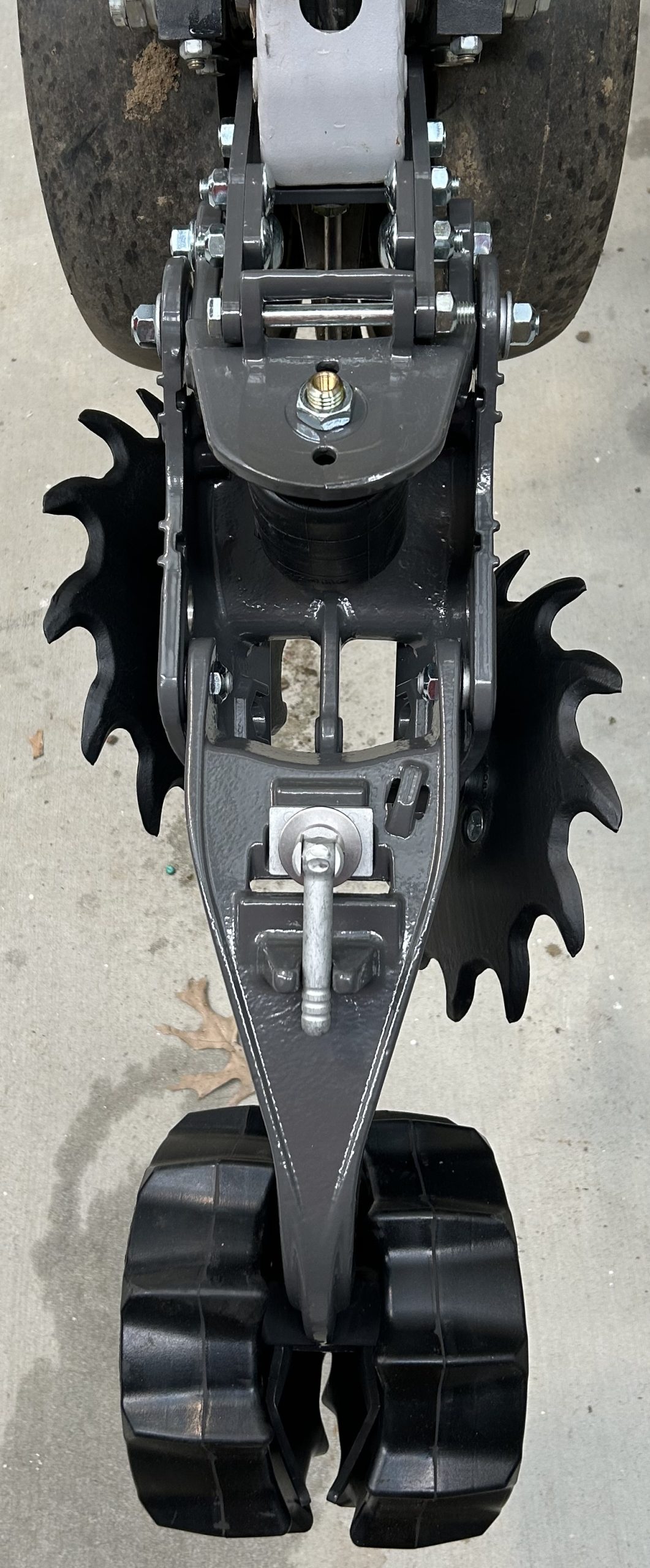
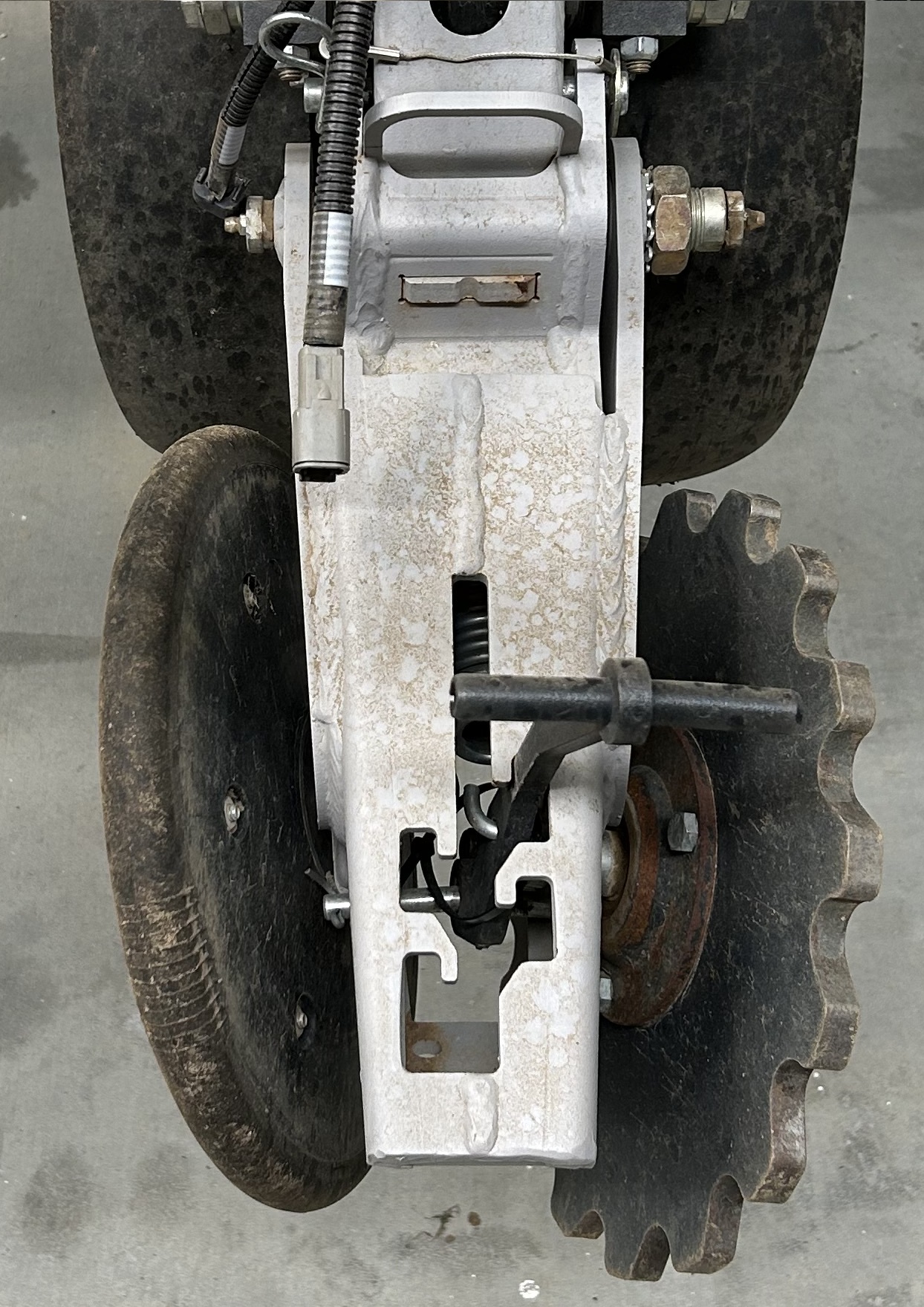
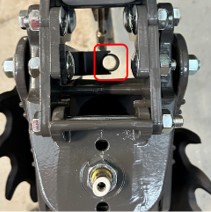
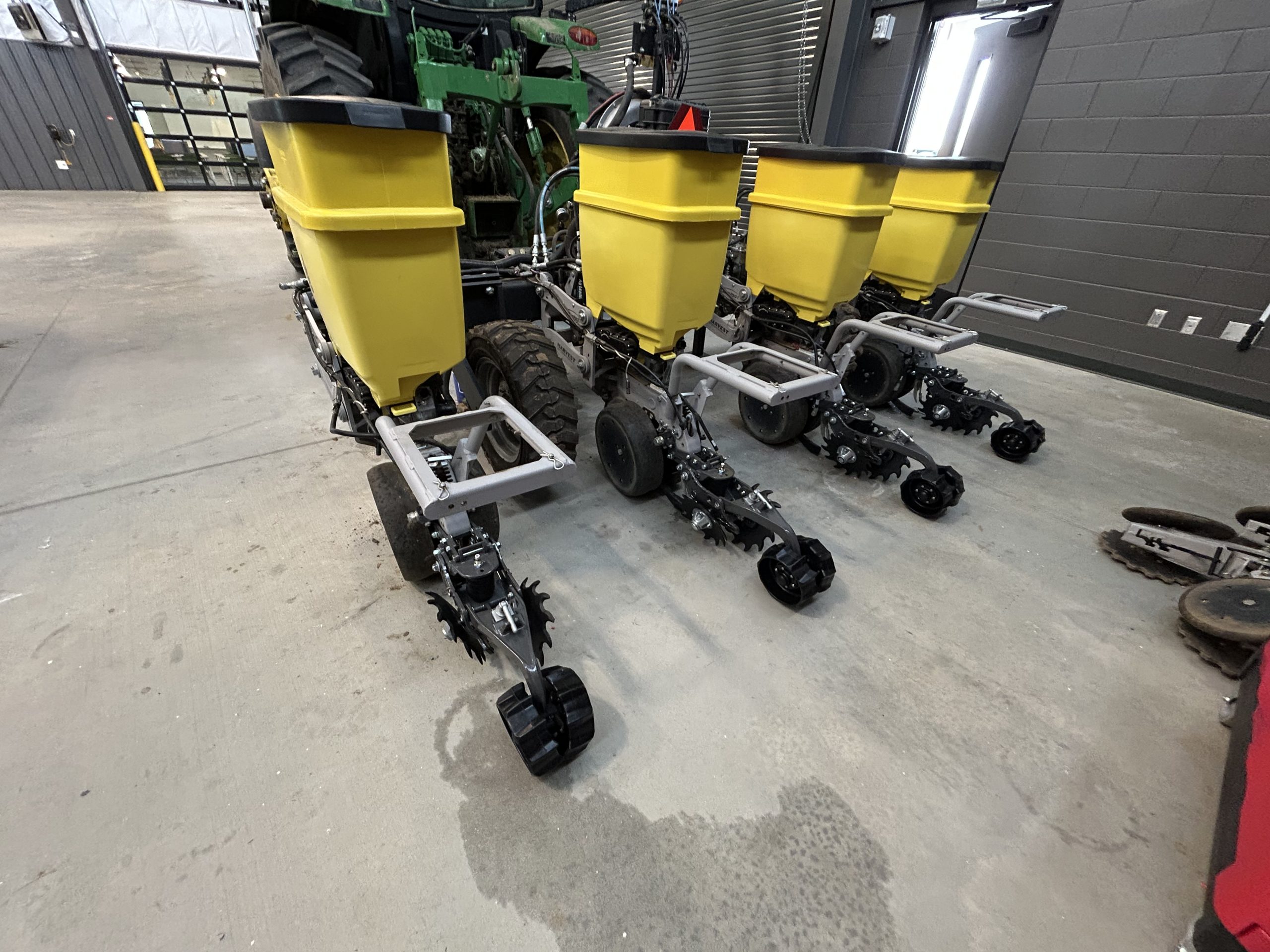
After the cotton planting operation at the DATA Farm last spring, seed was observed on the surface in many parts of the field. Dr. Wes Porter recommended switching the planter closing wheel system from the traditional V wheels to a single wide closing wheel system due to the shallow depth required for cotton (0.5” – 0.75”) where the traditional V closing wheels can push the seed to the surface as it squeezes the seed trench closed. ABAC’s Harvest International planter was upgraded during the last week of March with the installation of Precision Planting’s FurrowForce closing system. Figure 5A shows a rear view of the traditional V closing system on ABAC’s planter. Figure 5B shows the rear view of a FurrowForce unit from Precision Planting that uses two small coulter disks to cover the seed trench, and two wide interlocking wheels to pack the soil into the trench, ensuring good seed to soil contact without pushing seeds to the surface. FurrowForce uses an air system to apply pressure on the units, which can be adjusted to optimize their performance. The air system has a manual regulator (Figure 5C) located in the tractor cab for adjustments to match field conditions. Another benefit of the new system is shown in the overhead view of the FurrowForce frame, Figure 5D shows more access to route a tube to the seed trench to deliver granular insecticide products. The overhead view of the old system in Figure 5E shows the only route to run the tube to the seed trench was around the side. Figure 5F shows the installation location chosen for the granular tube bracket in the FurrowForce unit. This provides a straighter path from the granular hopper’s meter to the seed trench unlike last season’s setup where the tubes tended to kink and stop the flow of insecticide. Figure 6 shows ABAC’s planter with the FurrowForce system installed on the row units.
The monthly temperature trends and rainfall recorded by the on-site weather station for February are shown in Figure 7. Total rainfall was 4.4 inches.
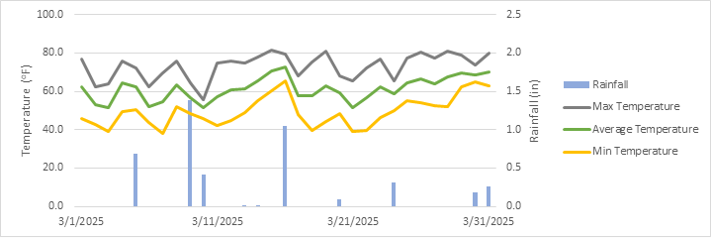
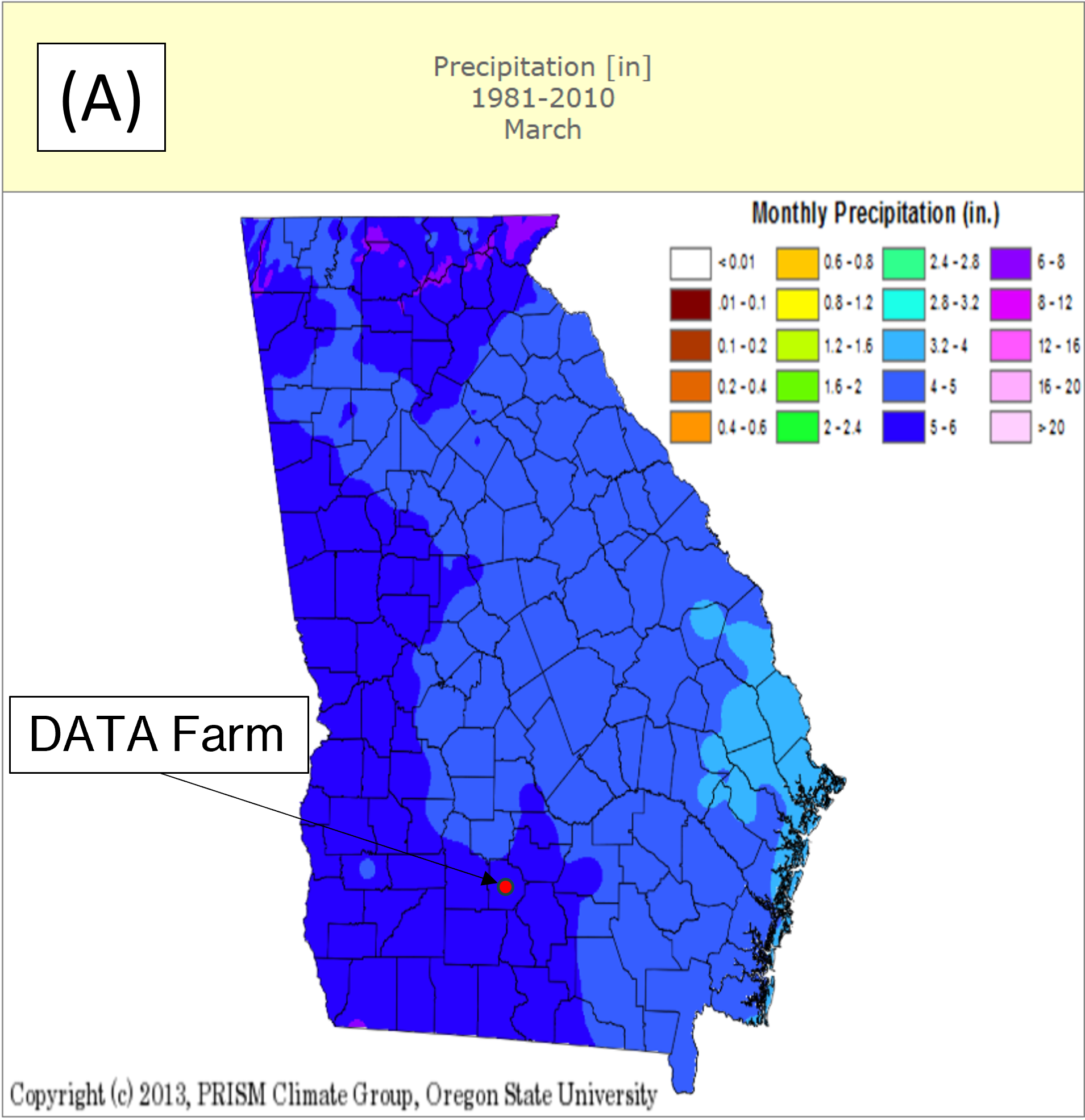
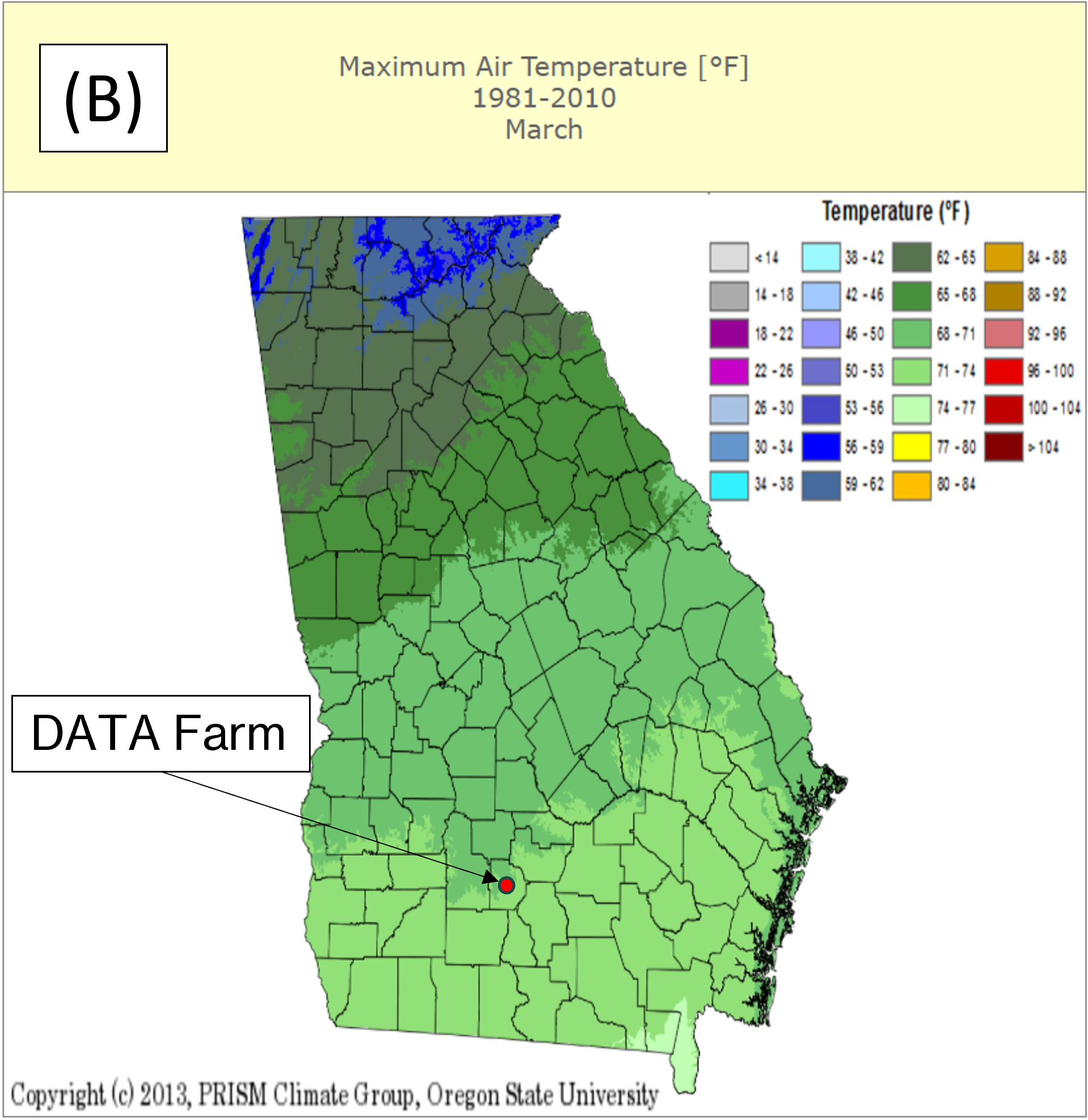
For comparison, Georgia climate maps based on data from 1981 to 2010 (UGA’s Weather Network) are shown in Figure 8 for the month of March for historical reference. While the rainfall increased over the past two months, the DATA Farm still received less than the average (5 to 6 inches). The average of recorded maximum temperatures for the month was 73°F which is in the average historical range (Figure 8B), and the average of recorded minimum temperatures was 49°F which also is in the average historical range (Figure 8C).
The rainfall during March brought the DATA Farm location from Moderate Drought (D1) to Abnormally Dry (D0) conditions. Figure 9A shows the current drought monitor map from the National Integrated Drought Information System for Georgia. As of March 25th, abnormally dry conditions are present in 33.8% of the state and moderate drought conditions decreased to 25.4% of the state from 39.1% on March 4th. Figure 3B shows drought conditions for Tift County where the 4D Farm is located. The county is split into mostly the abnormally dry (62.57%) range and 14.80% is in the moderate drought range with the 4D Farm location now in the abnormally dry area.
Operations:
Subscribe to get the latest posts sent to your email.