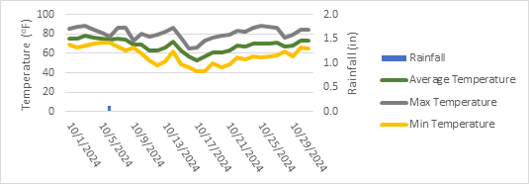
October started off with final spraying operations for the season followed by waiting for harvest to begin. The final peanut fungicide treatment of the season was applied on 10/4/24, and South Pivot’s cotton was sprayed with defoliant on 10/7/24 to prepare for harvest. South Central Ga Gin came on 10/29/24 to harvest the cotton, and the next day, we started inverting the peanuts to allow them to dry down for harvest. October brought optimal dry harvest conditions for cotton but caused issues finishing off the peanuts and made digging them difficult. Unlike September’s 16.9 inches of rain, October only had one measurable rain event of 0.1 inches on 10/6/24. The peanuts still needed moisture and heat units to finish off strong, but unfortunately, the weather did not cooperate. Figure 1 shows October’s rainfall with maximum, minimum, and average temperatures. During the seeding of winter cover crop in North Pivot, it was discovered that our pivot was not functioning when we tried to move it. Medders irrigation determined that the variable frequency drive was damaged by a power surge during the previous month’s storms. They are working to replace this soon so everything will be working before the next growing season.
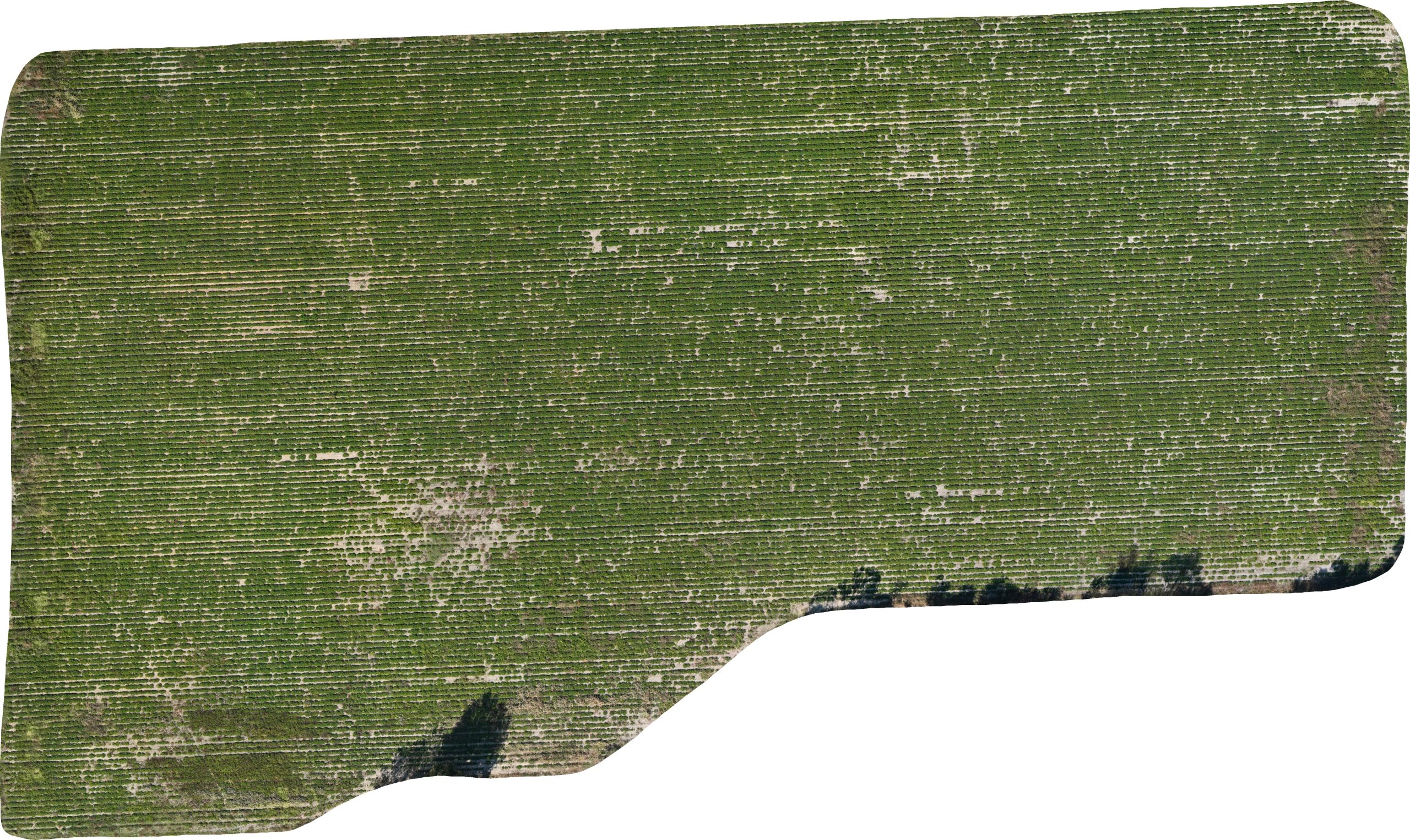
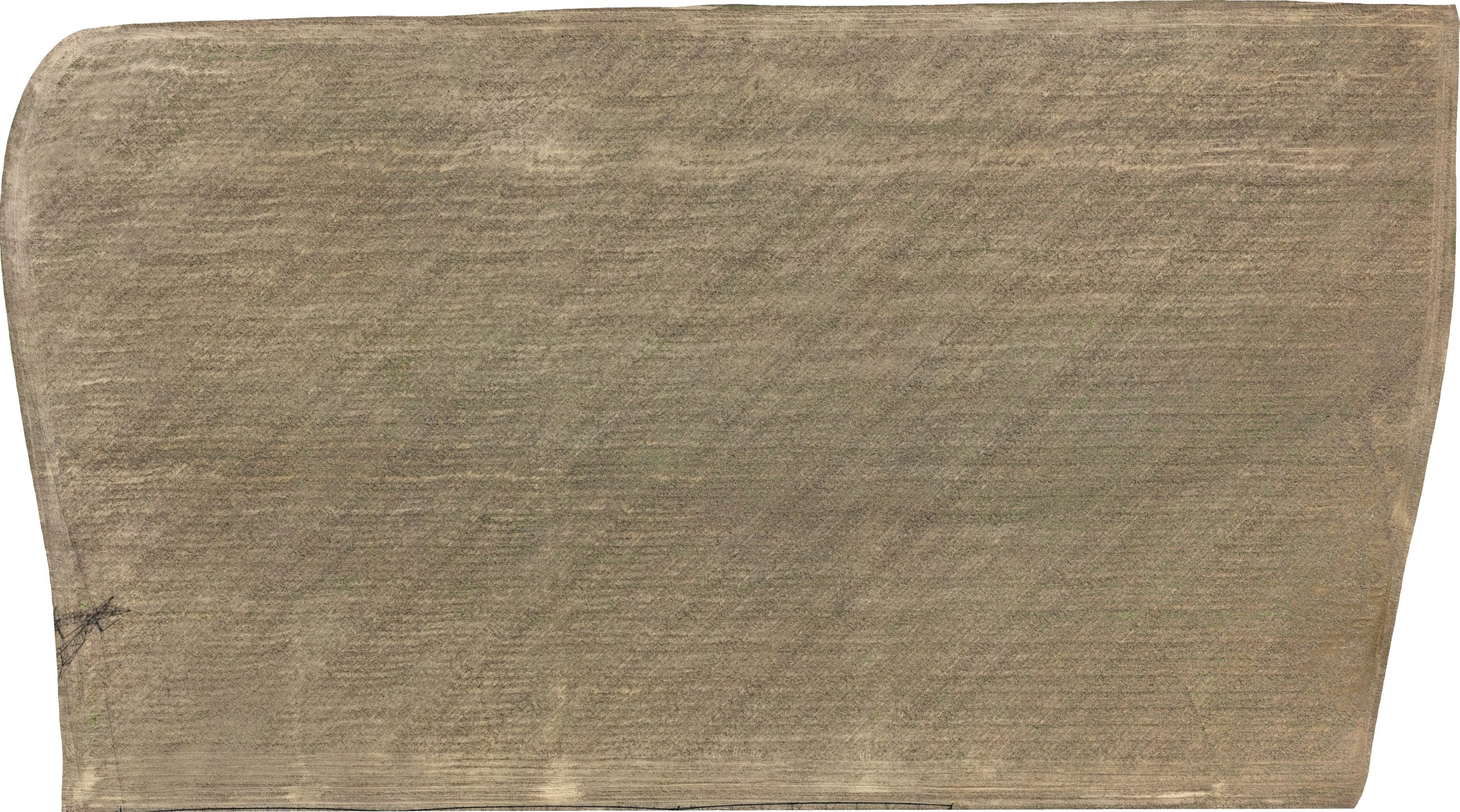
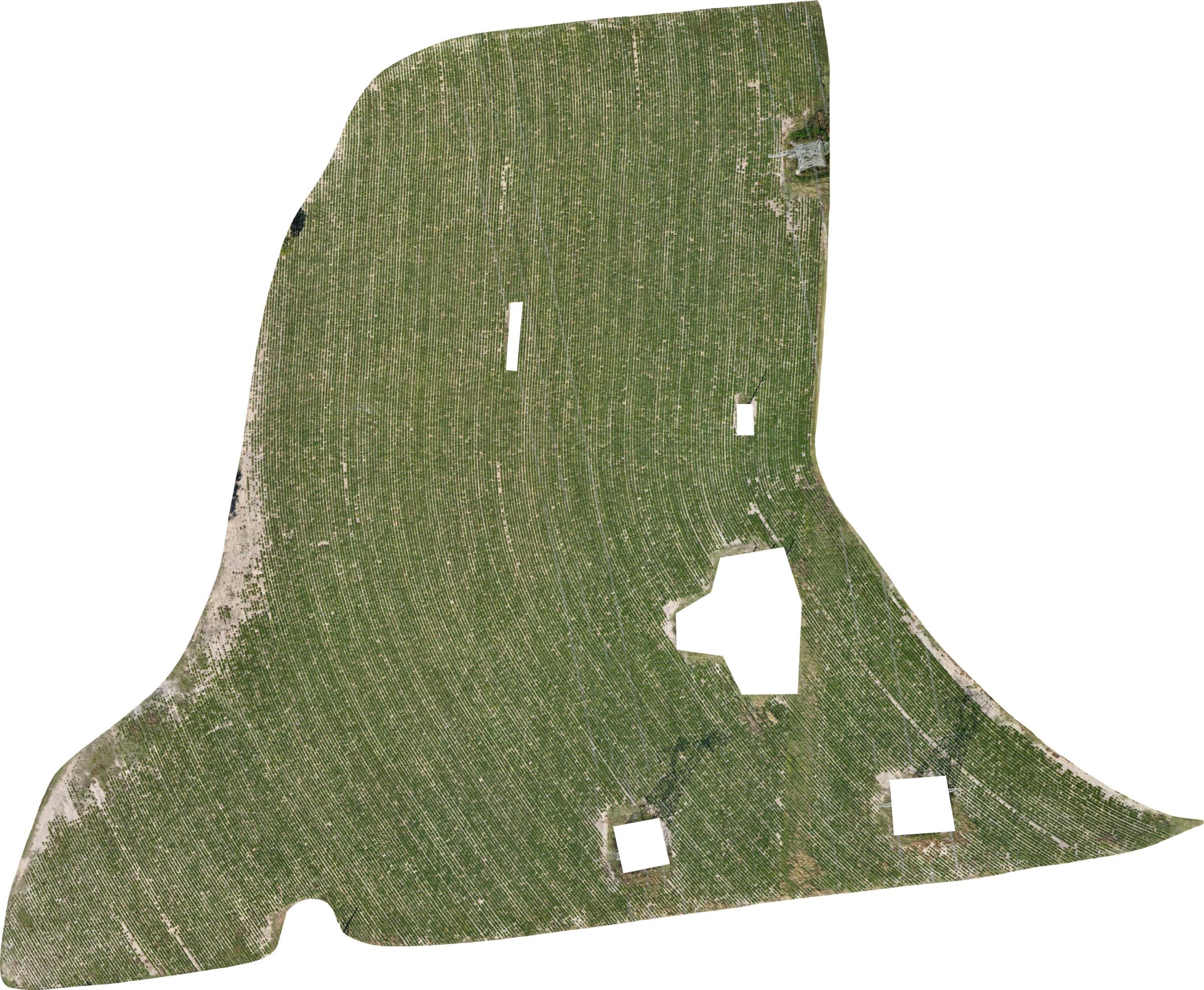
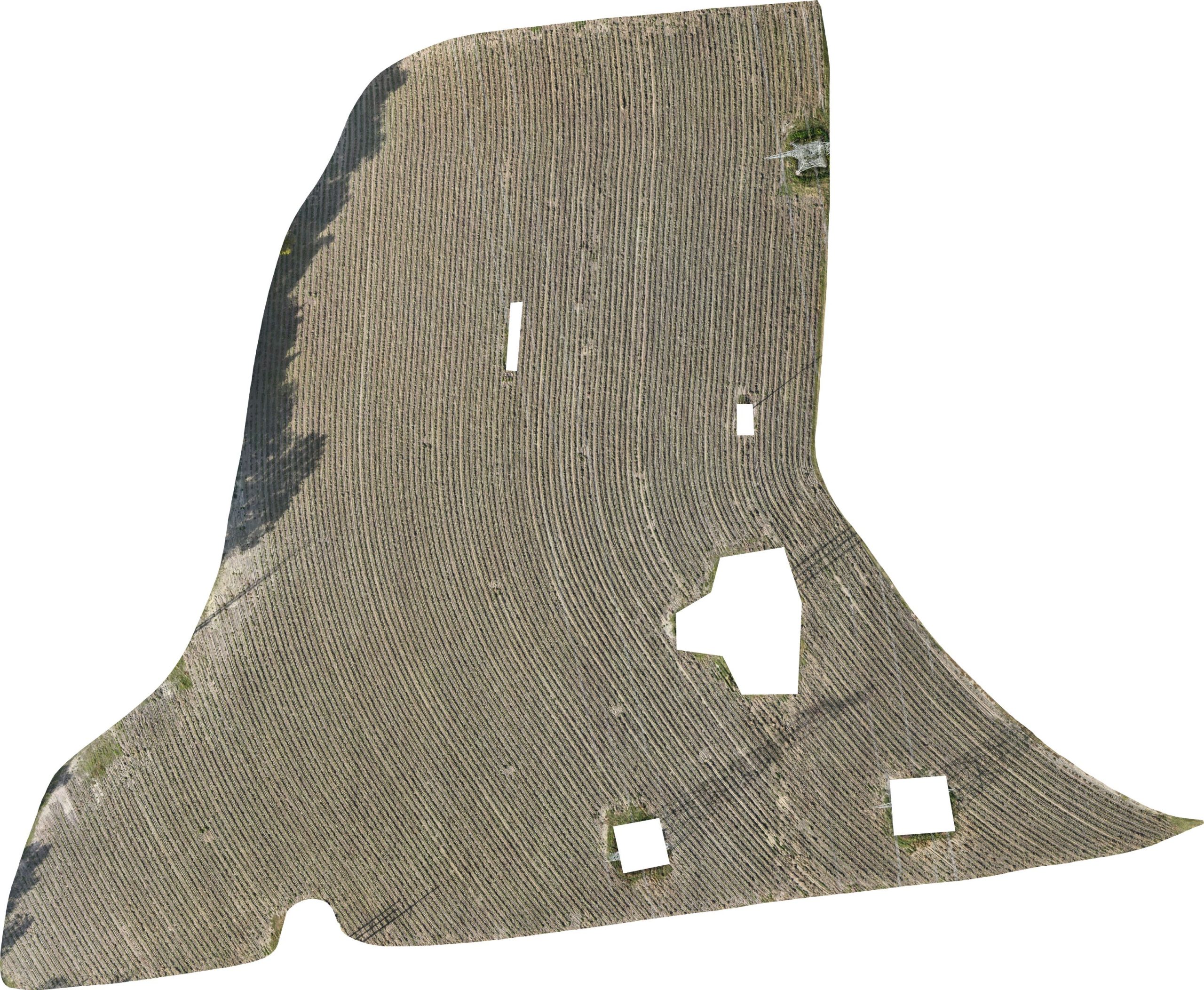
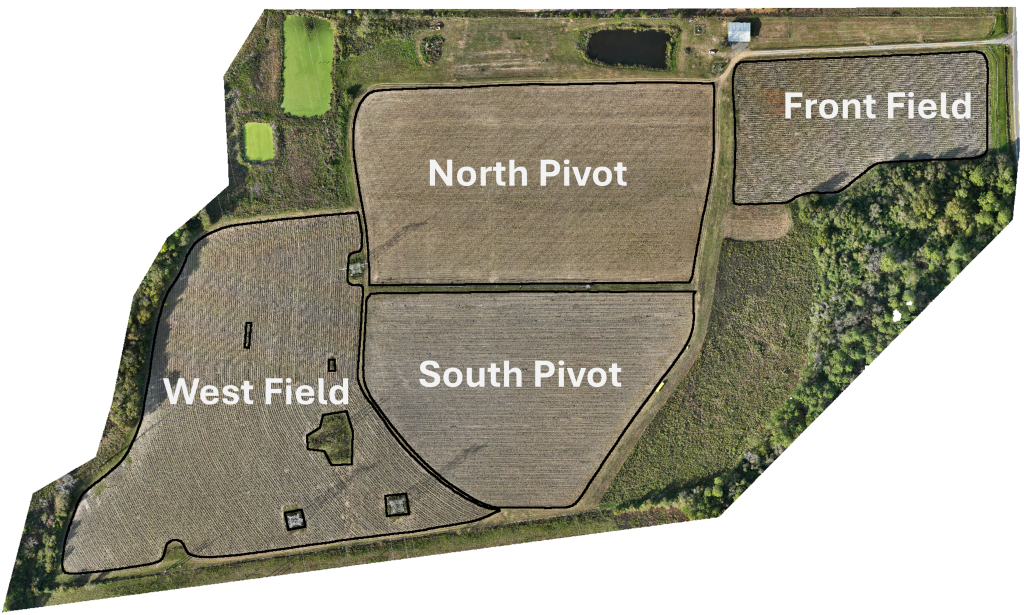
The peanuts were sprayed with their final fungicide treatment of Chlorothalonil on 10/4/24 and checked for maturity on 10/22/24 at 137 DAP. The maturity test showed they had around 7-10 days left until digging. During this time, the weather was extremely dry, so we were hopeful for rain before digging to soften the soil, but with no rain in the 10-day forecast, the decision was made to dig the peanuts on 10/30/24. Figure 2A shows Front Field on 10/24/24 and Figure 2B shows the field on 11/1/24 after the peanuts were inverted to dry for harvest.
Figure 2. Front Field drone maps from 10/24/24 and 11/01/24.
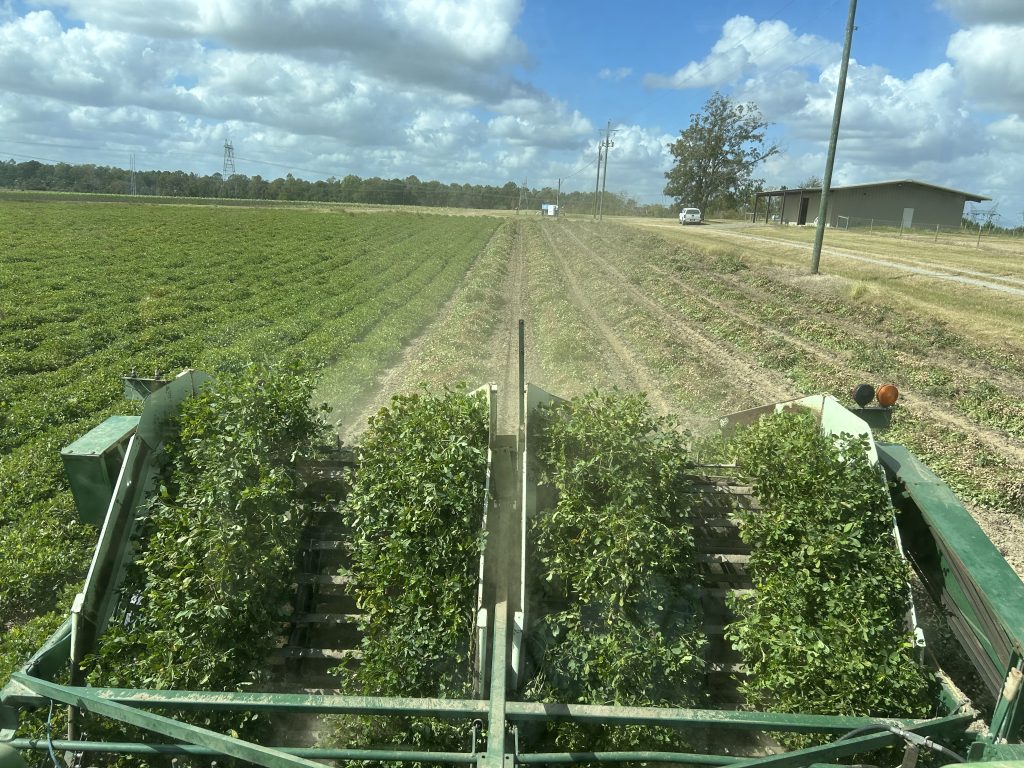
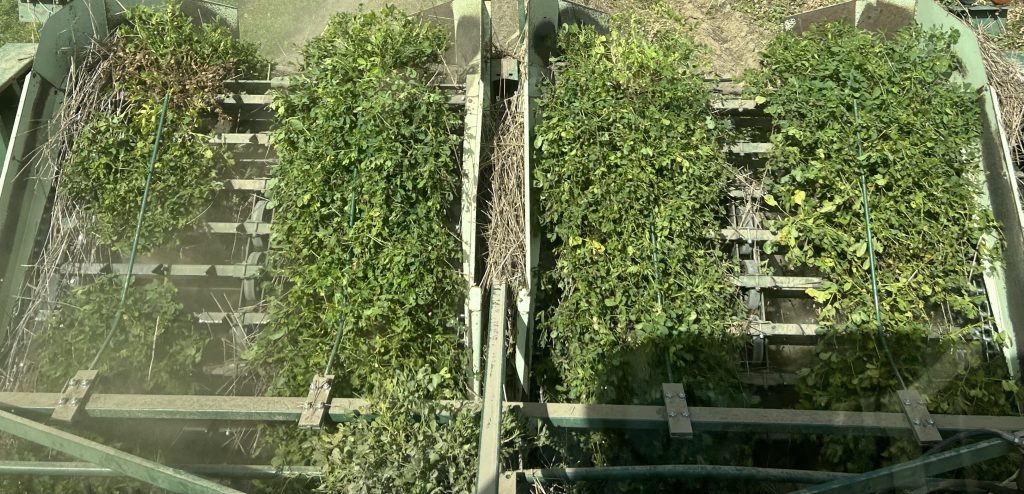
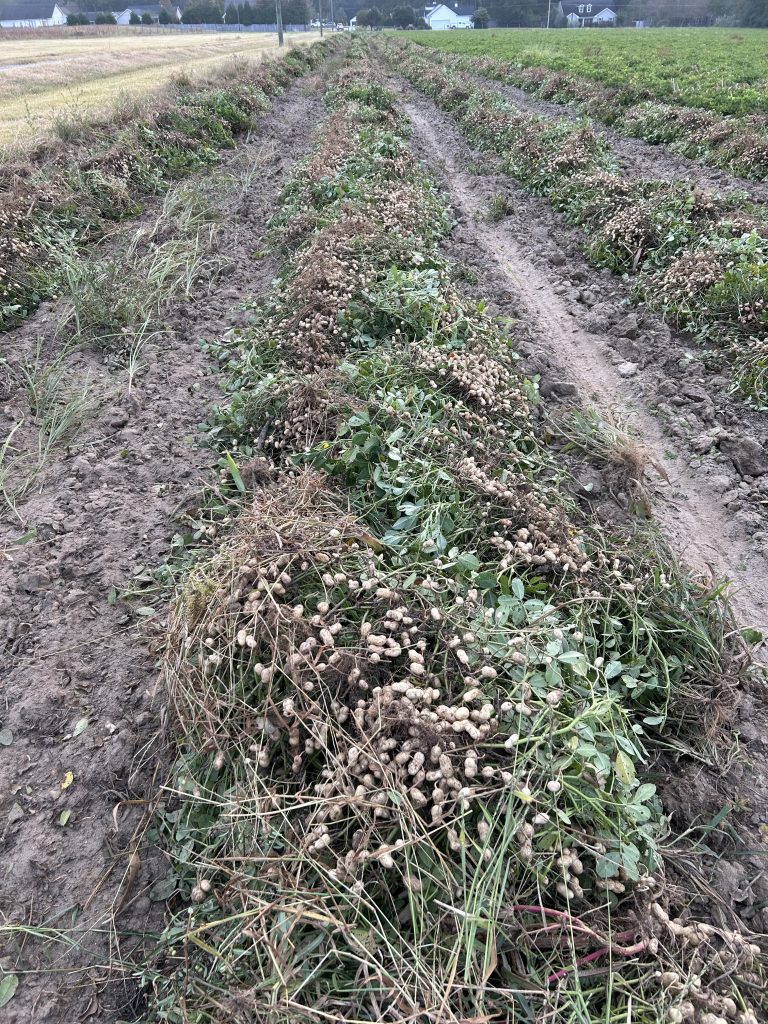
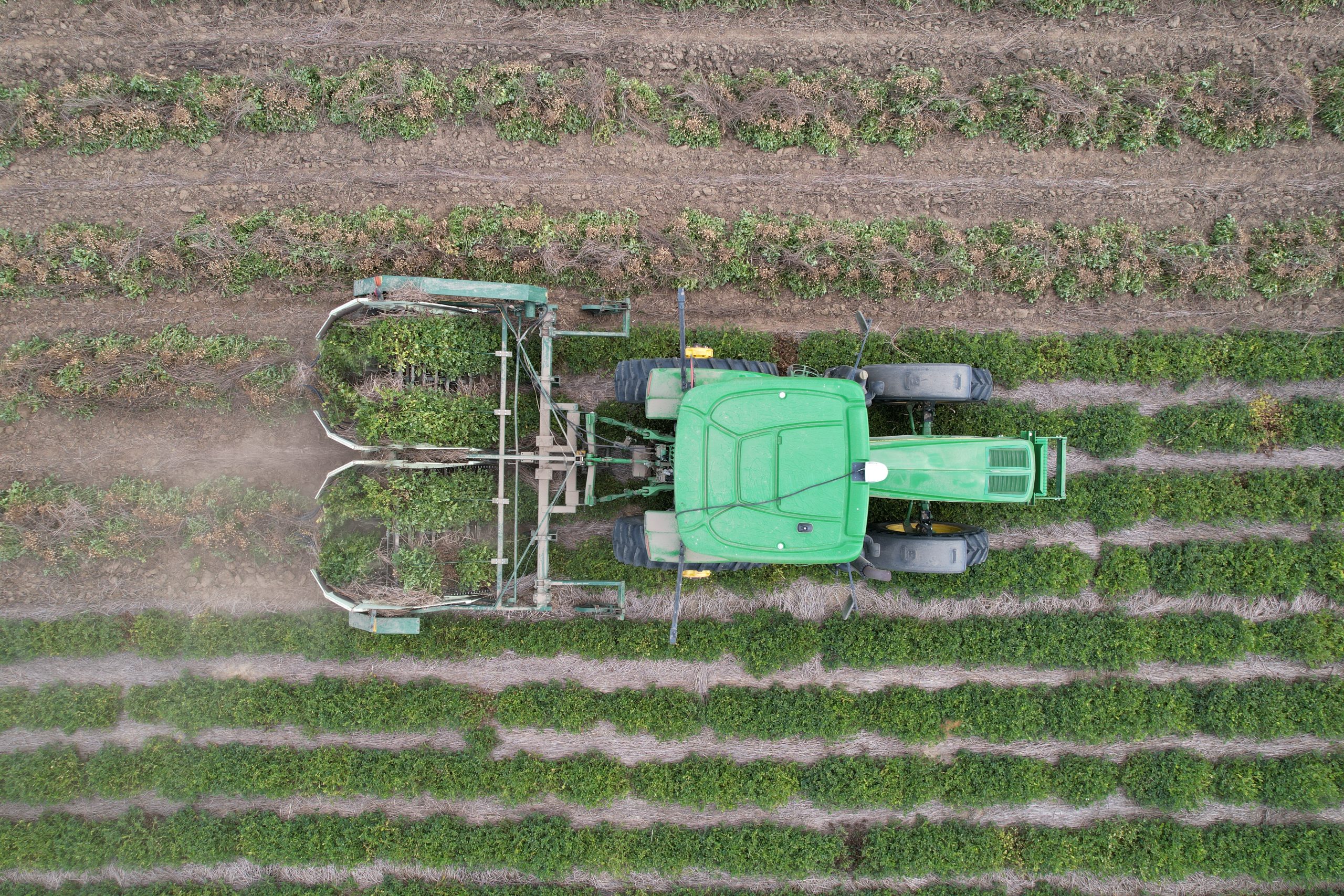
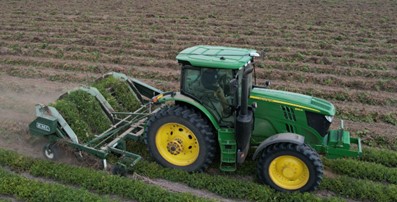
The peanuts were inverted using ABAC’s John Deere 6195R tractor and UGA’s KMC 4-Row peanut inverter as shown in Figure 3A. The peanut vines were smaller due to the cover crop residue, which caused them not to flow up the inverter chains very well. Newer KMC peanut inverters have vine hold down bars to solve this problem. We purchased the parts from KMC: Figure 3B shows the inverter with the hold down bars installed. These bars press the vines against the chains so they flow up over the top correctly, creating a more consistent distribution of plants behind the digger. This translates into more consistent feed in the combine during harvest.
Aside from the small vine issues, the dry soil conditions were not optimal for digging. The clay patch on the western end of the field (red circle in Figure 2B) caused issues by breaking two sets of blade mounting bolts on the inverter. Next, the peanuts will be harvested by KMC using their combine with a yield monitor system they are testing. This should occur during the first week of November depending on weather conditions.
October activities in North Pivot centered around seeding the winter cover crop after the plant back restriction from last month’s herbicide expired. Figure 4A shows the field just after seeding and running the Resi-Till implement. On 10/29/24 the rye started to emerge from the soil even in the dry conditions, hopefully November will bring needed rain for the rye crop to fully germinate. Figure 4B shows the field on 11/1/24 where you can see the field color changing slightly as the rye begins to grow.
Figure 4. North Pivot drone maps from 10/24/24 and 11/01/24.
After calibration, the cereal rye cover crop was spread across the field using the adjusted spreader. To cover the 14 acres of North Pivot, 34 bags of cereal rye seed were needed for a rate of 120 lbs/ac. The spreader was loaded with 34 bags of cereal rye seed, plus 2 extra bags to ensure coverage along the field boundary. After the operation, the Ag Leader monitor showed an application coverage of 15 acres, and the spreader was almost empty. This resulted in 1800 total pounds of seed distributed across 15 acres for an average rate of 120 lbs/ac, showing the calibrated settings were correct. The next day the seed was cut in with a KMC Resi-Till vertical tillage implement (Figure 5B).
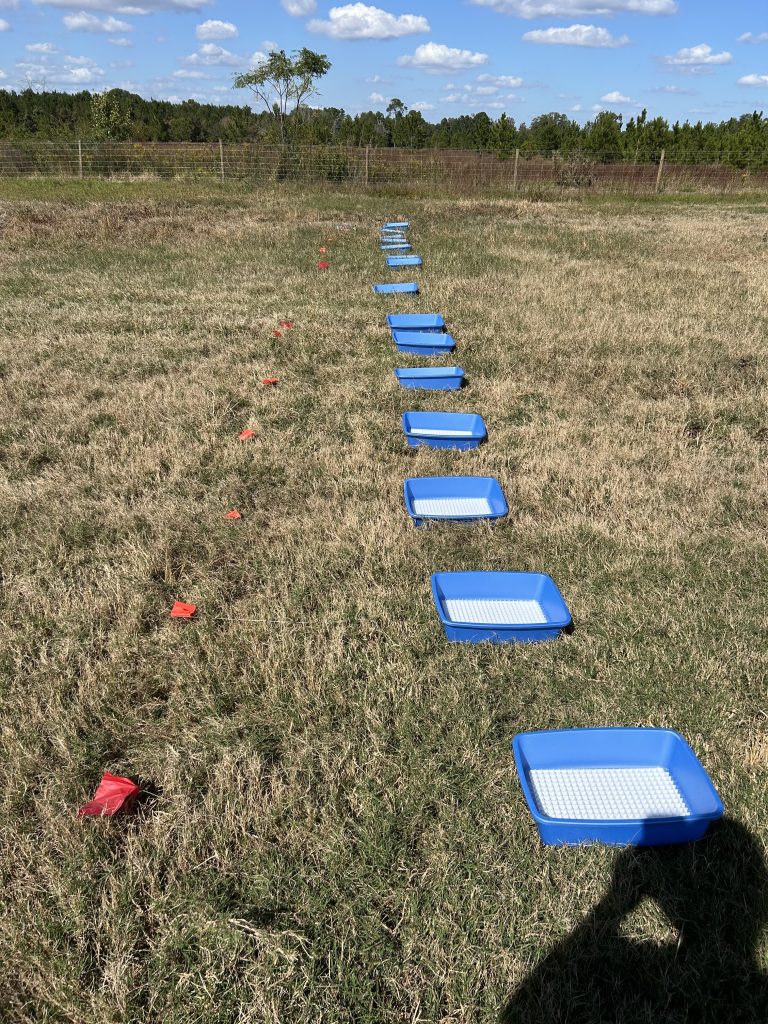
To begin the seeding process, ABAC’s Doyle spreader was calibrated on 10/23/24 with the help of Dr. McLemore’s AENG 3113 Ag Machinery Systems class. A catch pan kit from UGA Ag Engineering was used to ensure a rate of 120 lbs/ac and 30 ft swath width. Figure 5A shows the catch pan setup in the demo area of the DATA Farm, where the calibration was performed. A seed density of 50 lbs/ft3 for the rye was determined using a fertilizer density scale. This density value and the target rate were used with the chart on the spreader to determine the gate opening size. The chart showed that with a density of 50 lbs/ft3, using a 1.5” gate opening should achieve a rate of 121 lbs/ac, which is the closest to our target rate of 120 lbs/ac. Using this gate setting with a speed of 5 mph for the first run of calibration resulted in very poor distribution that did not register in the catch pans. A second pass with a gate setting of 3” was used and achieved a rate of 146 lbs/ac with an even distribution across a 30 ft swath width. A third pass with a gate setting of 2” resulted in the same rate of 146 lbs/ac but an uneven distribution pattern. For the fourth pass, the vanes on the spinner pans were adjusted in the opposite direction of disk rotation to correct the distribution problem, and the gate was lowered back to 1.5” to reduce the rate. This gate opening with the adjusted spinner vanes resulted in an average rate of 112 lbs/ac with an even distribution. These settings were the closest to the target without going over so they were chosen for the field application.

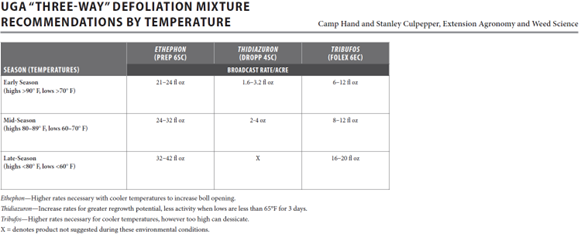
South Pivot’s cotton was sprayed with a defoliation mixture consisting of Setup 6SL (32 oz./ac.), TDZ 4SC (4 oz./ac.), Folex 6EC (12 oz./ac.), Trivium (5.5 oz./ac.) on 10/7/24 to remove the leaves and open the remaining bolls for harvest. The products and rates chosen were based on the UGA Cotton Production Guide “Three-Way” Defoliation Mixture Recommendation chart on page 152 and current and forecasted temperatures. The defoliation mixture recommendation chart is shown below in Figure 7. The Mid-Season option was selected for highs in the 80’s and lows in the 60’s. This mixture provided defoliation, regrowth control, boll opening, and a surfactant.
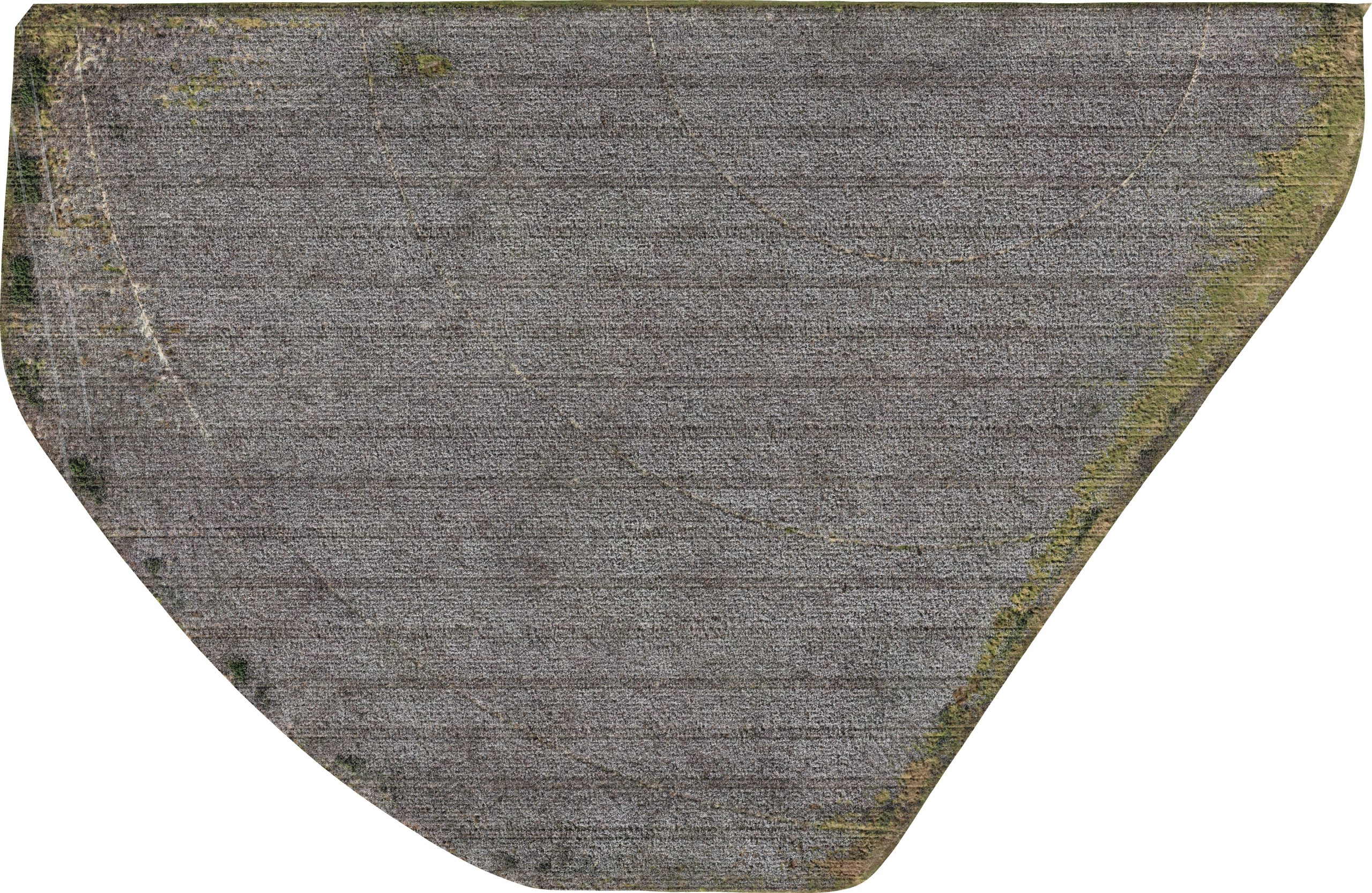
Figure 6: South Pivot drone maps from 10/24/24 and 11/01/24
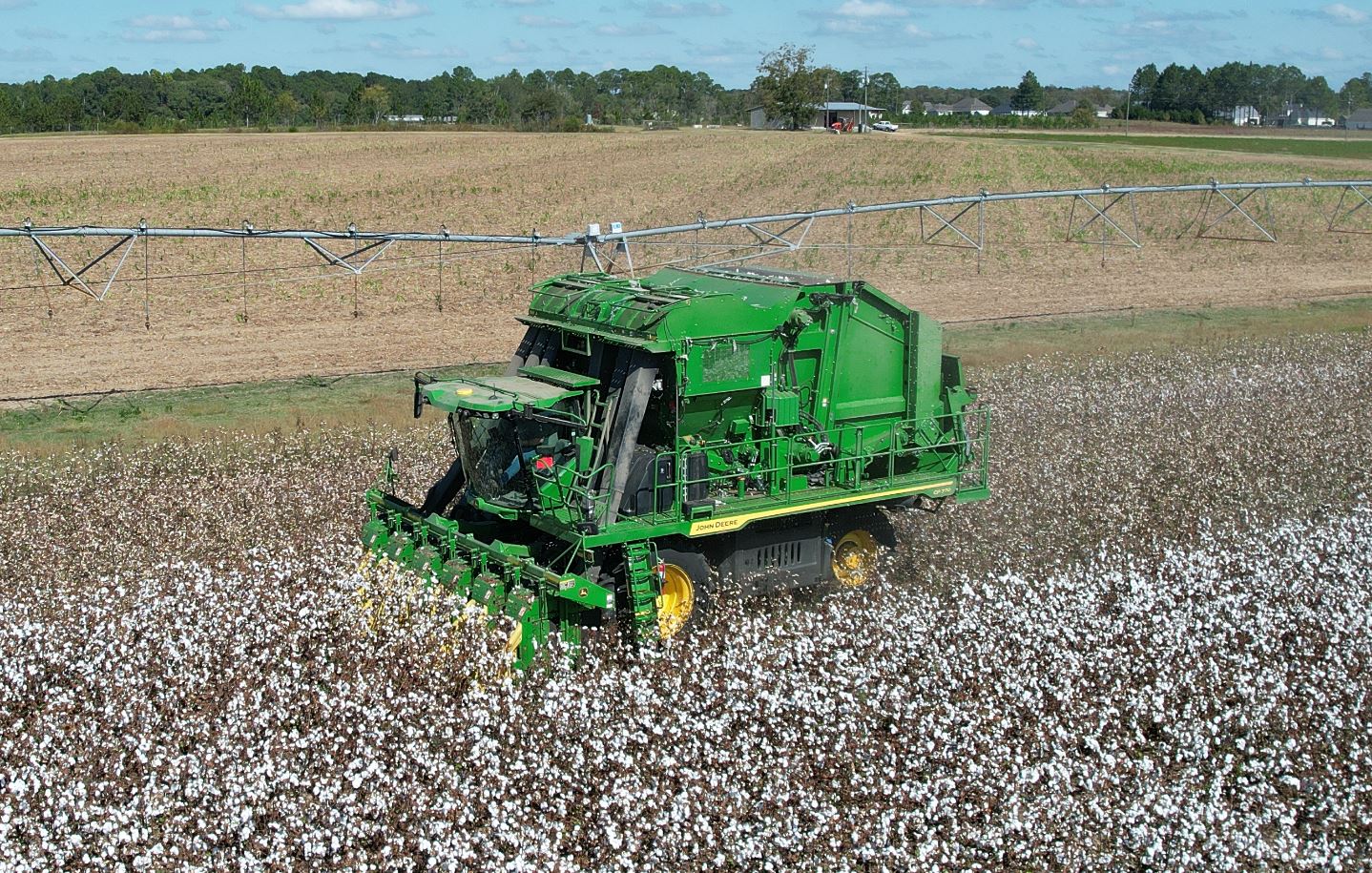
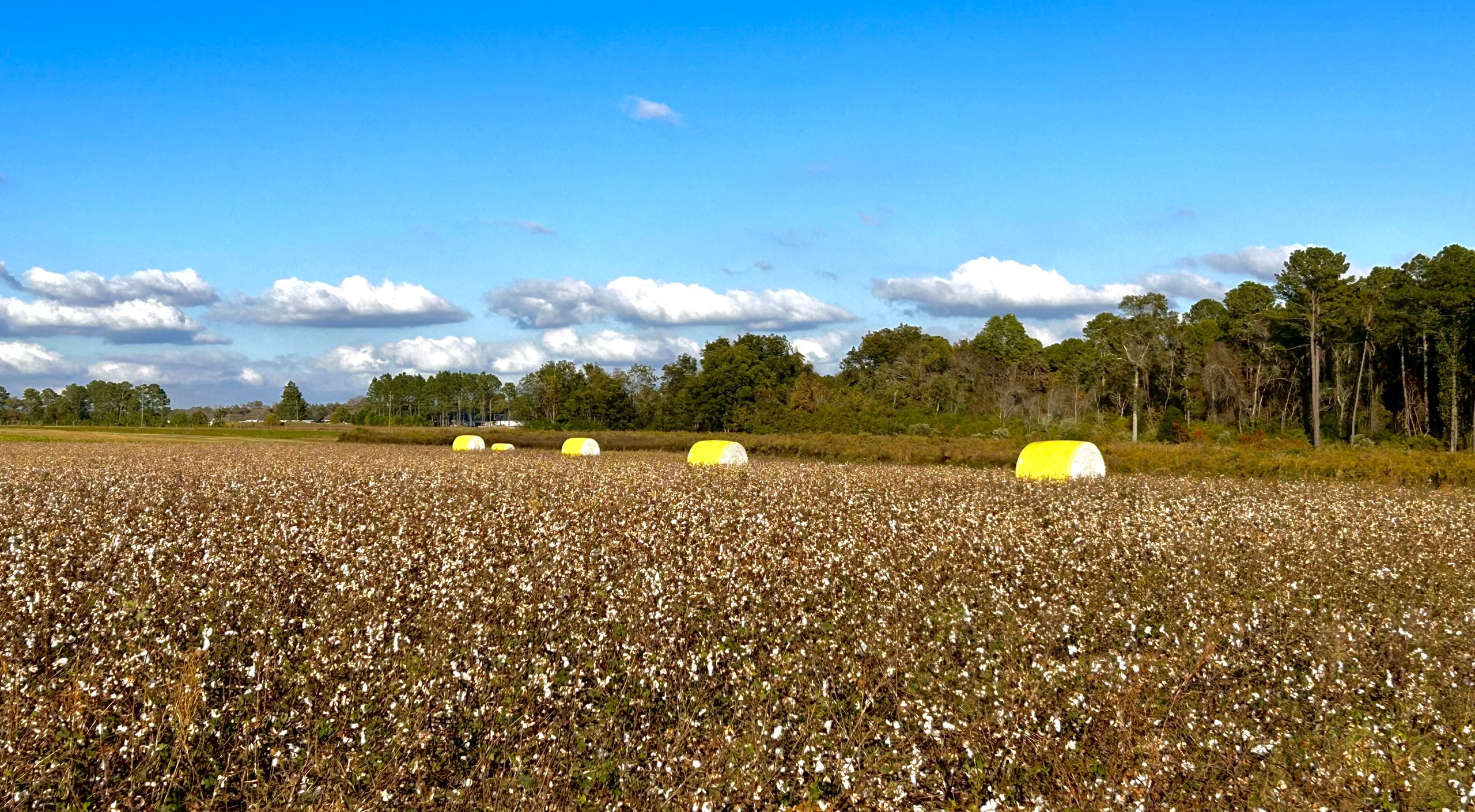
On 10/23/24 the gin checked the cotton, determined it was ready for harvest, and scheduled the picker for the following week. On 10/29/24 the gin’s harvest crew arrived with a John Deere CP770 roller picker equipped with yield monitoring sensors. The picker successfully removed the cotton from the stalks and produced 4 whole rolls and one-half roll to be ginned. Next month we should have the yield data from the picker and a gin report on the cotton.
The peanuts were sprayed with their final fungicide treatment of Chlorothalonil on 10/4/24 and checked for maturity on 10/22 at 137 DAP. The maturity test showed they had around 7-10 days left until digging. During this time, the weather was extremely dry, so we were hopeful for rain before digging to soften the soil, but with no rain in the 10-day forecast, the decision was made to dig the peanuts on 10/31/24. Figure 9A shows Front Field on 10/24/24 and Figure 9B shows the field on 11/1/24 after the peanuts were inverted to dry for harvest. The peanuts were inverted using ABAC’s 6195R tractor and UGA’s KMC 4-Row peanut inverter as shown in Figure 10 A and B. The peanut vines were smaller like Front Fields so, the vine hold down bars were necessary. The dry soil conditions were not optimal for digging, in some areas of the field the inverter blades were shattering the soil instead of flowing smoothly. Next, the peanuts will be harvested by KMC using their combine with a yield monitor system they are testing. This should occur during the first week of November depending on weather conditions.
Operations:
Subscribe to get the latest posts sent to your email.