West Field – Cover: Cereal Rye, 109 DAP; 2024 Crop: Dryland Peanuts
Recent Activities
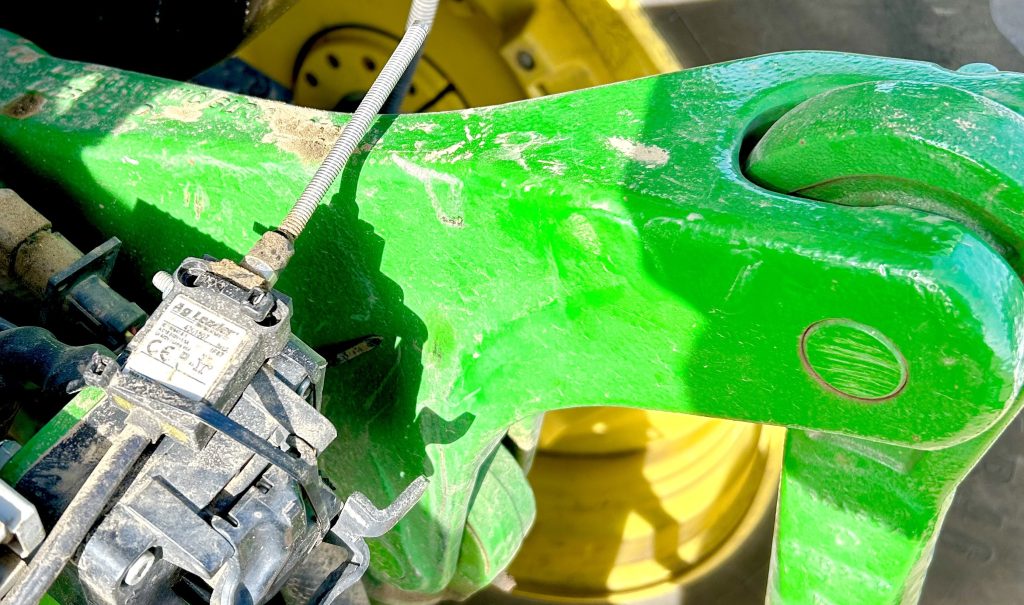
Figure 1. Implement switch on 3-point lift
An implement switch module was added to ABAC’s 6195R tractor to allow for cleaner coverage maps when using implements without technology on them. The switch was tested on the spreader by adding it to the hydraulic arm that engages the drive wheel when applying product. This saves the operator from having to press the log button in addition to the hydraulic switch to start spreading. After spreading, the switch was moved to the tractor’s lift arms for 3-point implements such as our KMC strip till toolbar (Figure 1).
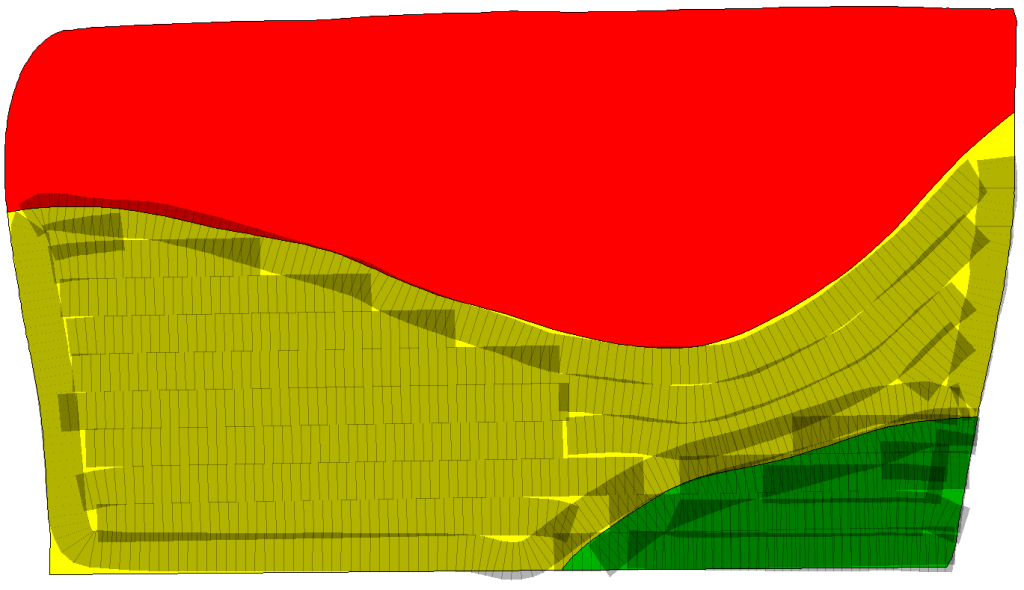
Figure 2. P Prescription Map with second application coverage
On Monday, a fertilizer product from Ty Ty Ag with a grade of 10-41-0 was applied to zones needing additional phosphorus than the 75 lbs./ac. that was applied in the first passblend (Figure 2). This method was chosen to address variability shown in the fall grid soil testing. Figure 2 shows data logged from the two applications overlaid onto the prescription map. The red zone did not need additional phosphorous, the yellow zone needed an additional 45 lbs./ac., and the green zone needed an additional 95 lbs./ac. The green zone fertilizer was applied by driving over the zone with at 45 lbs./ac. rate twice, resulting in a 90 lbs./ac. applied rate.
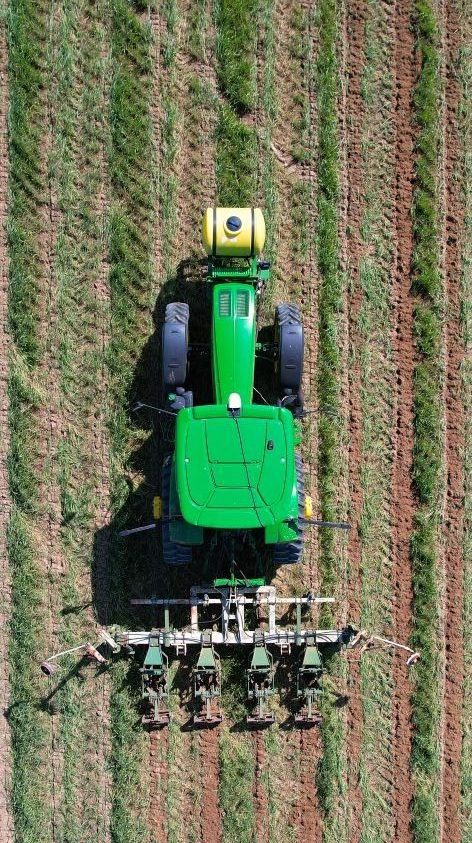
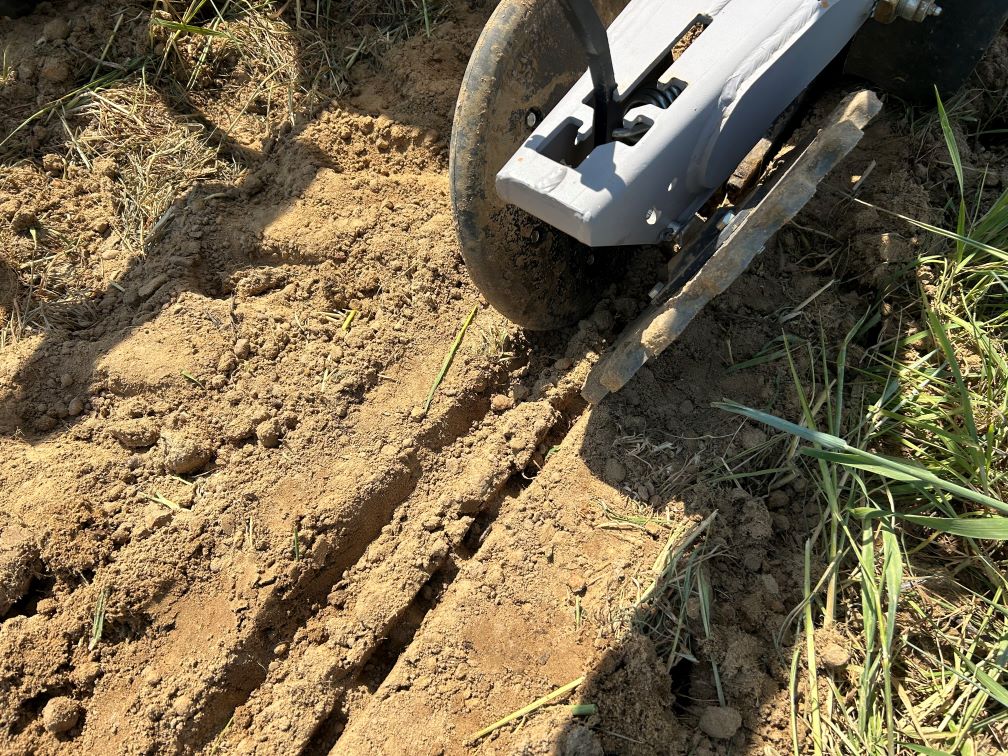
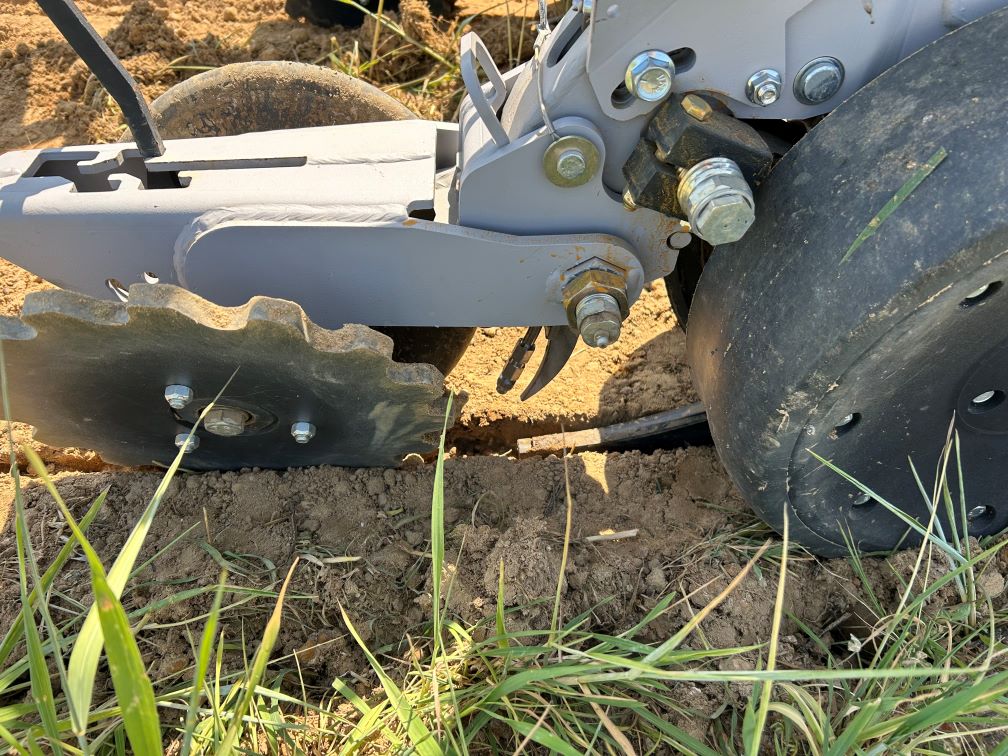
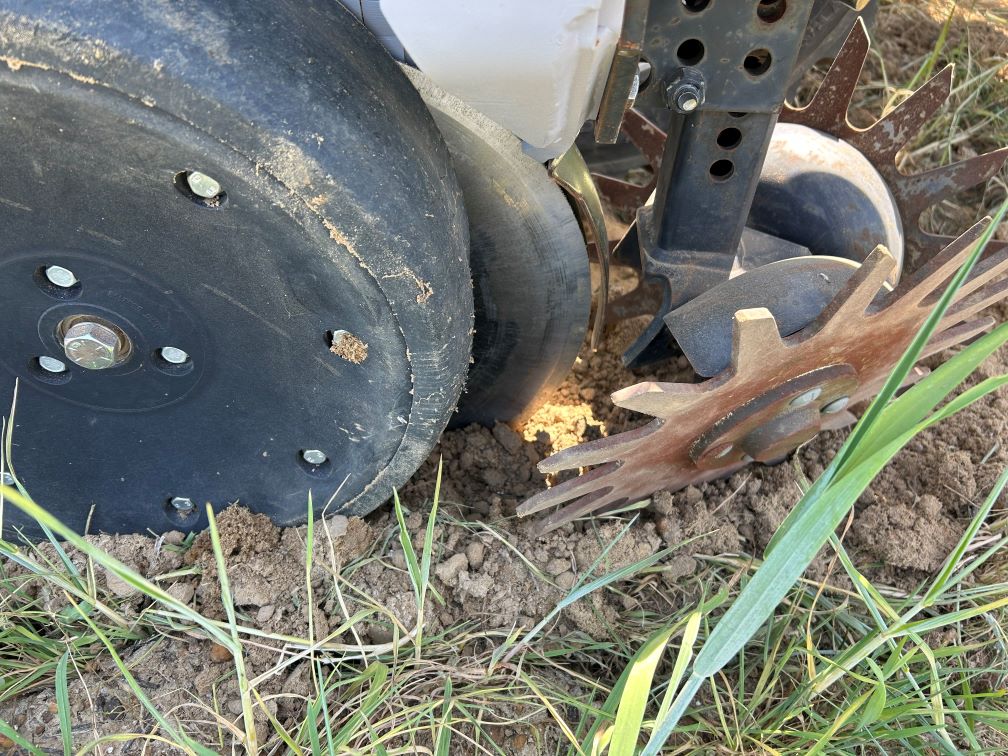
On Tuesday afternoon, strip-till was performed on North Pivot, but cover crop root mass created the need for a second pass before planting (Figure 3). On Wednesday morning, a 2nd pass of strip-till was made.Row cleaners were added to the planter to help manage residue within the rows. Figure 4C shows the cleared path in between row cleaners and opening disks, 4B shows the seed firmer in the seed trench with the liquid fertilizer nozzle just above the tail of the firmer, and 4A shows the closed seed trench.
Figure 3. Planter unit with row cleaner and seed firmer.
Figure 4. Strip Till 2nd Pass
Figure 5. Planter unit with row cleaner and seed firmer.
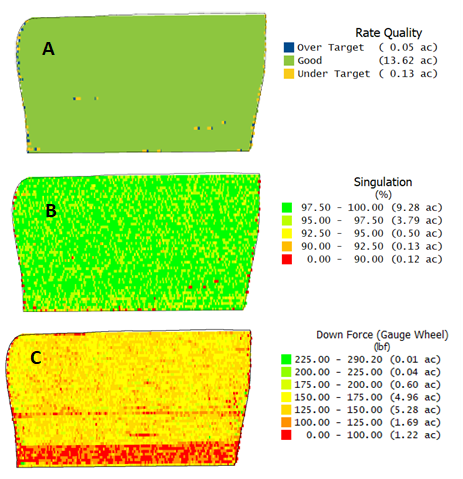
The plan was to plant Wednesday afternoon, but we experienced issues with the liquid pop-up fertilizer. A crystallized layer settled on the bottom of the tank, which kept clogging the filter. Thursday morning the fertilizer was pumped through a screen into another tank. The tank on the tractor and all lines were then flushed to remove all residue that would cause clogging.Thursday afternoon the corn was successfully planted in North Pivot with a target population of 32,000 seeds per acre with 6 gallons per acre of pop-up (10-34-0) fertilizer applied in furrow. According to the production guide, the planting rate needs to be increased by 10% to hit your target population. The planter seeding rate was set to 35,200, and the downforce was set to heavy due to the strip-till residue. Figure 5A shows the rate quality results, Figure 5B shows the singulation quality, and Figure 5C shows the downforce applied.
Upcoming Week
Operations: Monitor North Pivot for corn emergence
Water needs: None
Sensors: Reinstall moisture sensors in North Pivot after planting.
Other:
Discover more from 4D Farm
Subscribe to get the latest posts sent to your email.